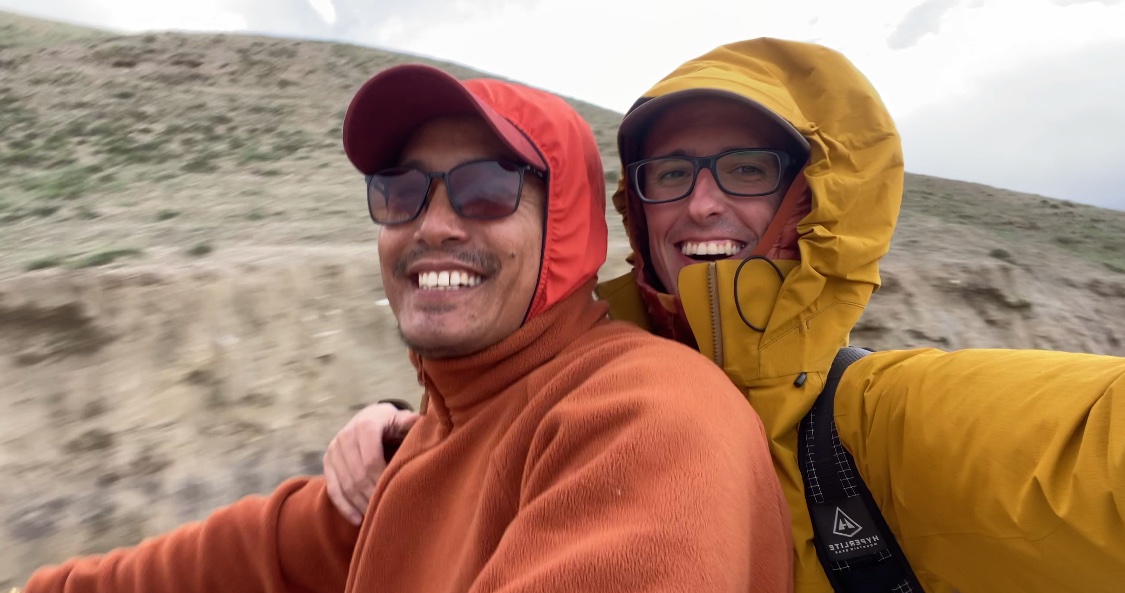
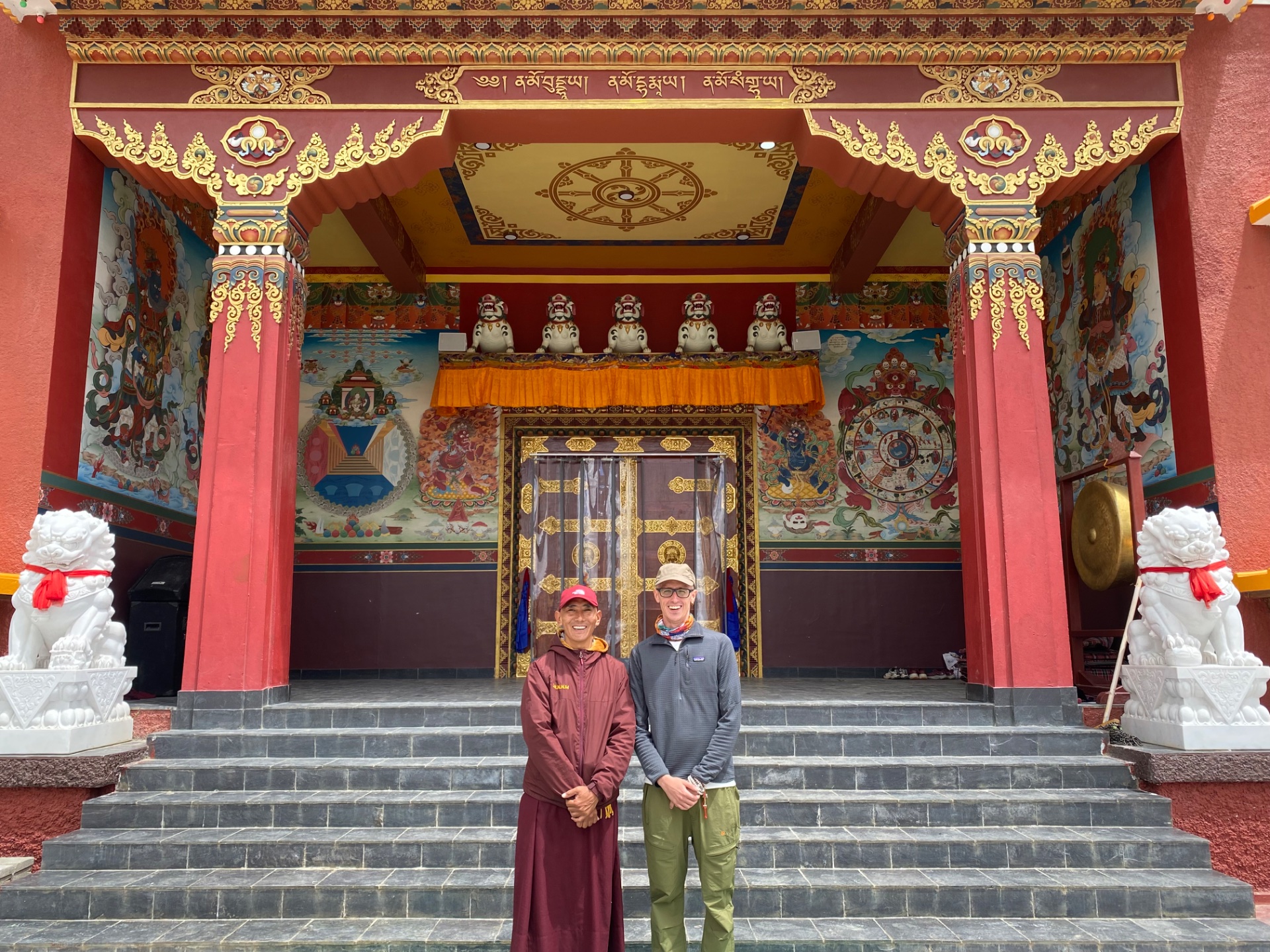
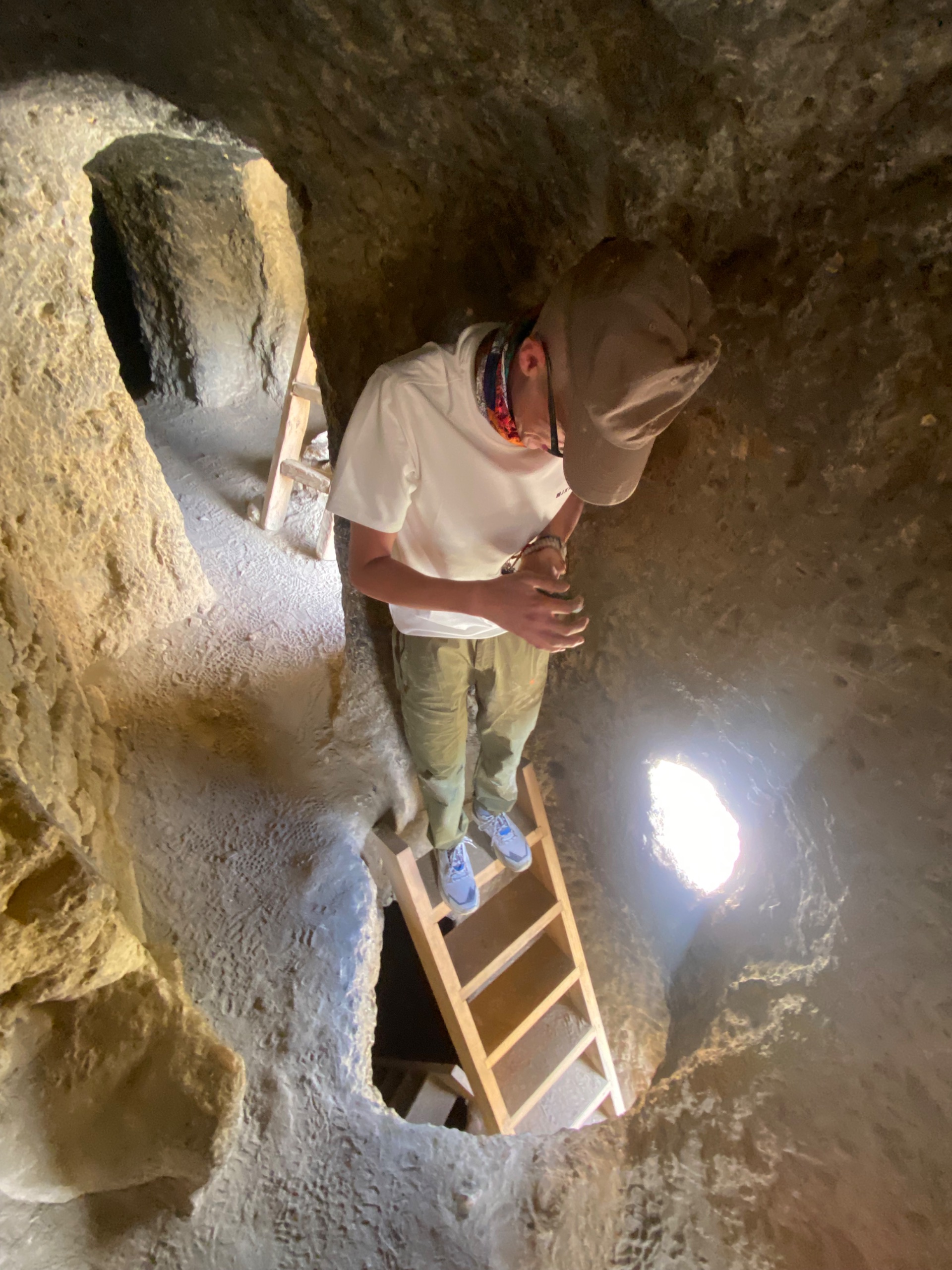
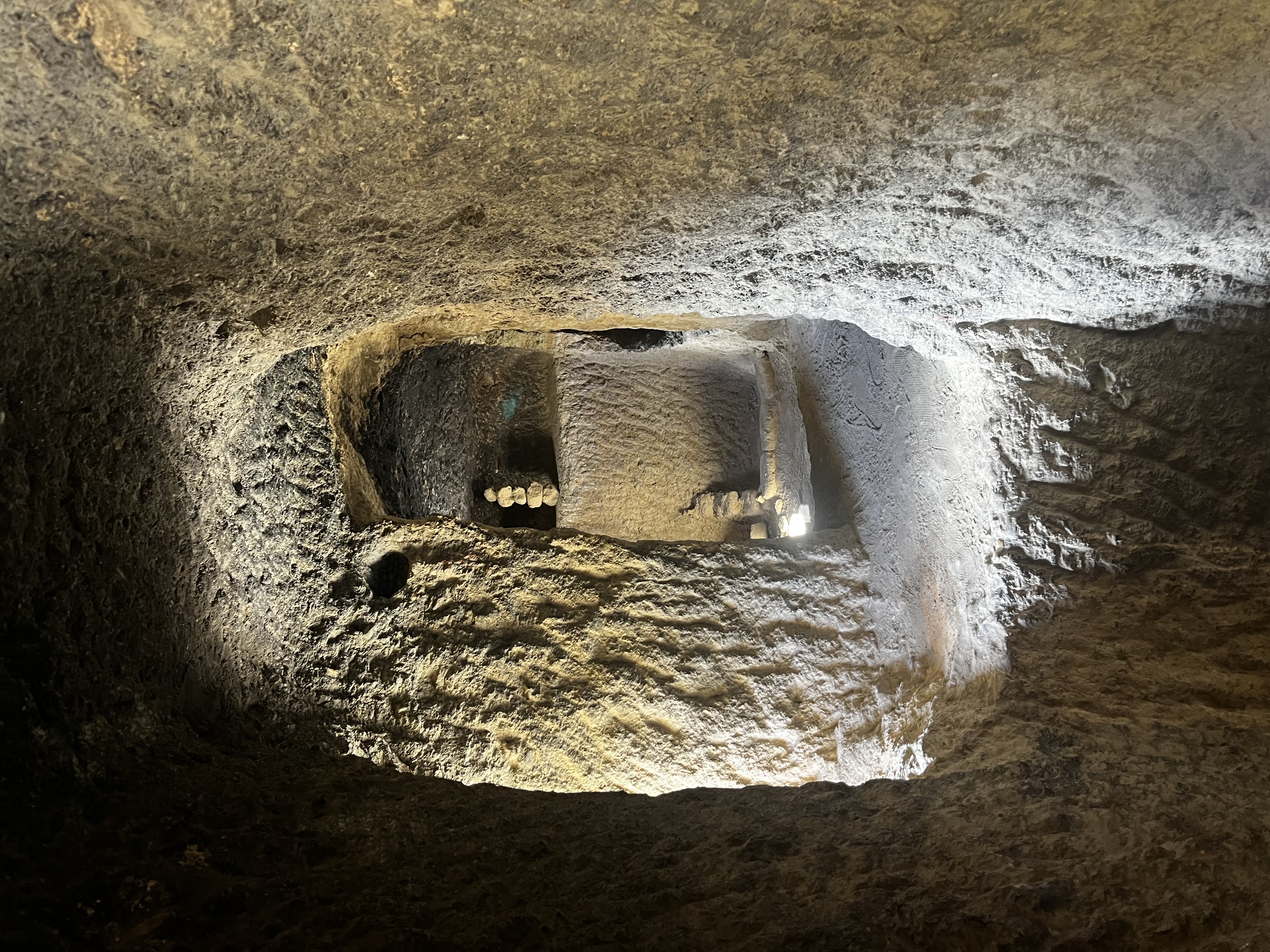
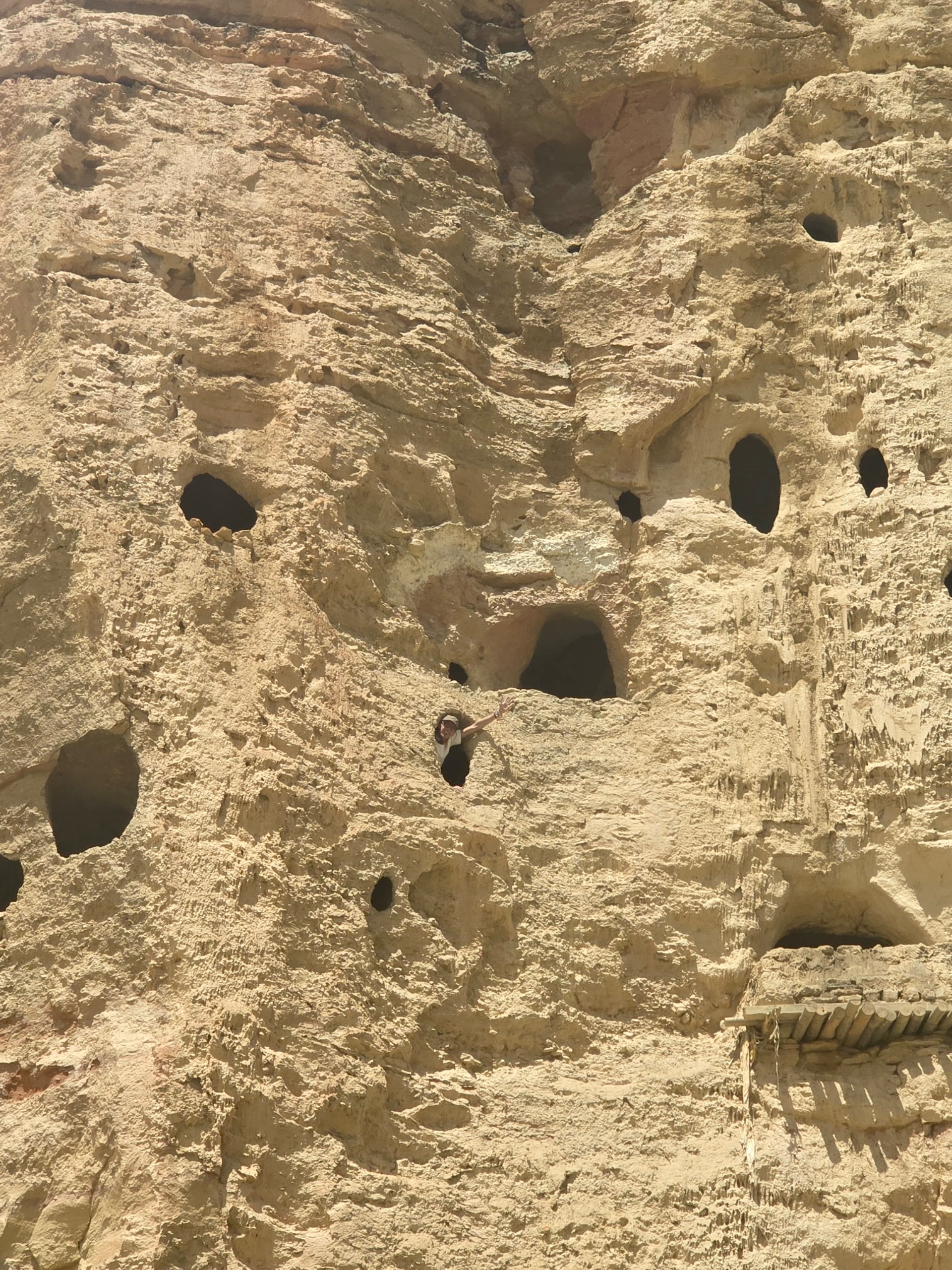
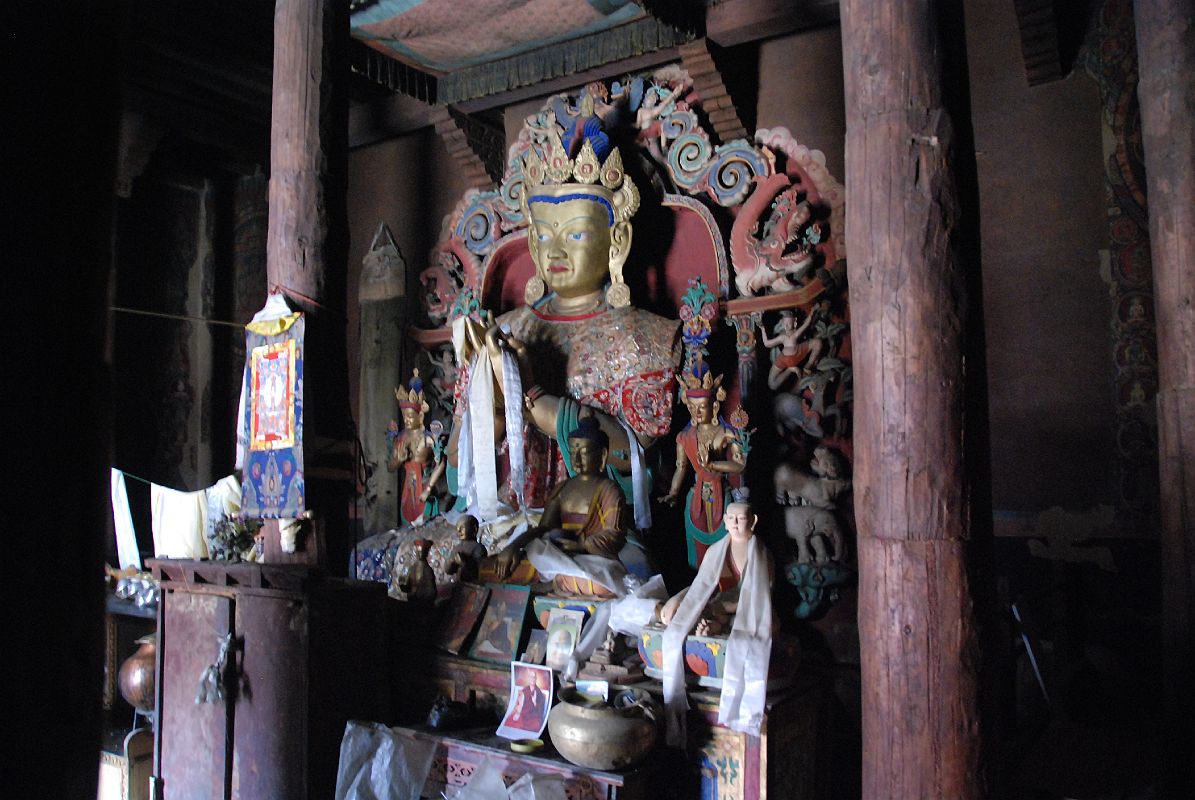
From August 19th to August 25th 2026 I visited Upper and Lower Mustang with Khenpo Ngawang Tashi.
Altitude
Drove from Pokhara (800m altitude) to Lo Manthang (3800m), that’s an increase of 3000m!
To prevent altitude sickness it’s best to not go beyond 500m after passing 3000m.
Didn’t have altitude sickness symptoms other than peeing a lot and slight preassure in head and eyes.
I woke up so many times the first night, each time clearly remembering the dreams but since I didn’t write anything down I lost them at early morning except for one where I was waiting to receive a Sakya name from Sakya Trizin Rinpoche, which in fact I commented to Khenpo Ngawang Tashi about, and he said he could arrange it. Let’s see, it would be auspicious.
Mineral Pigments
Mustang Mineral Pigments
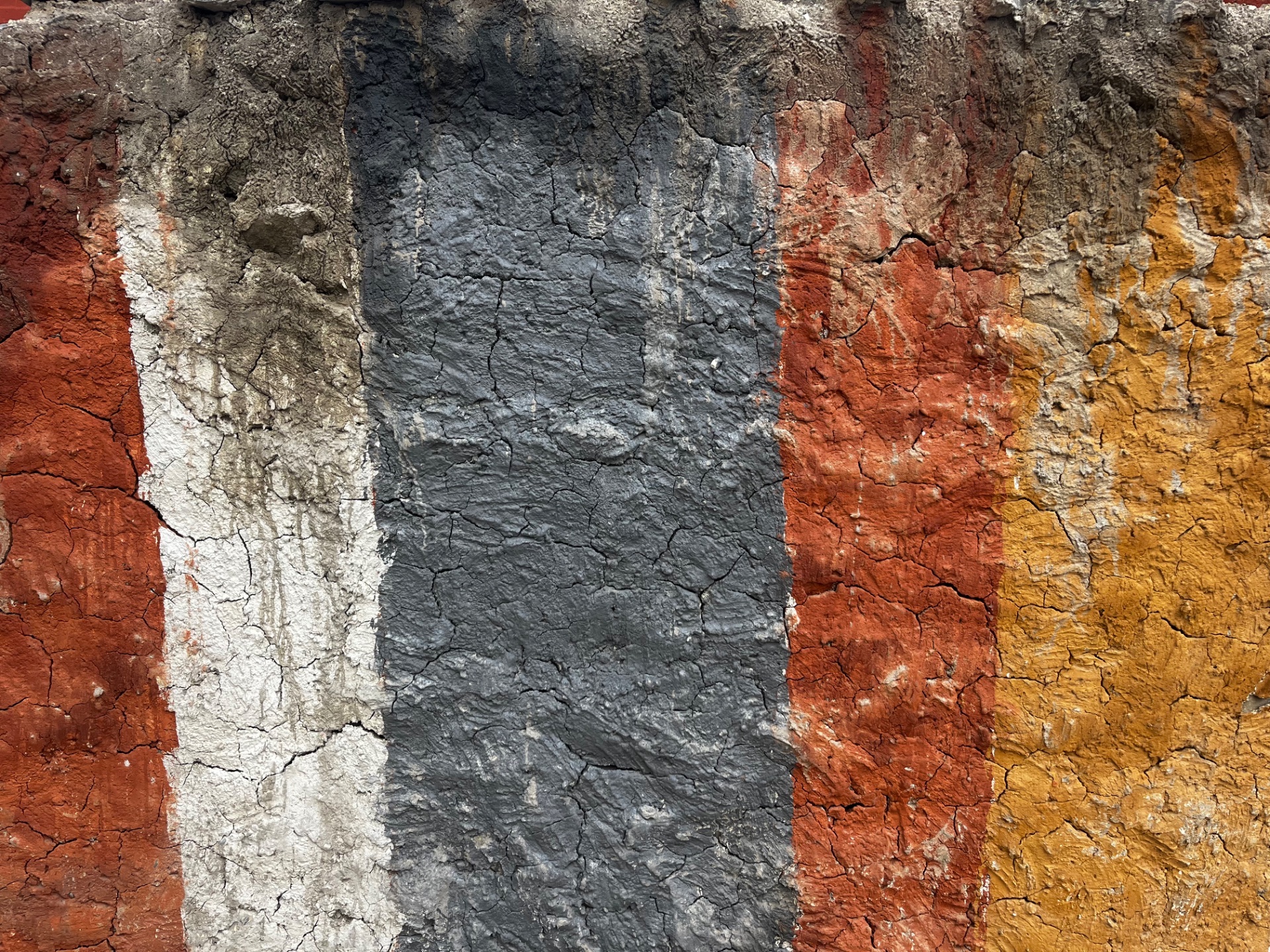
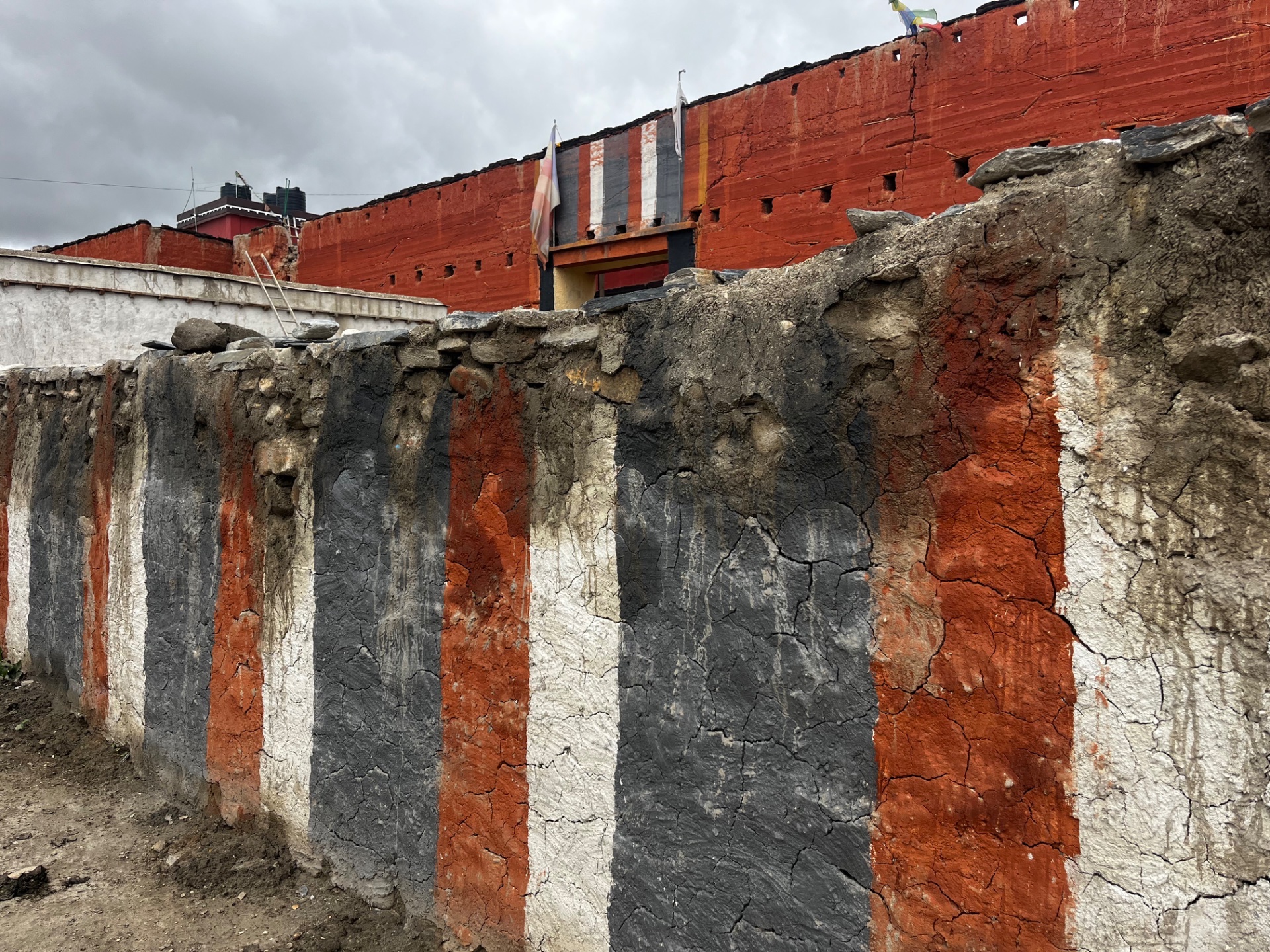
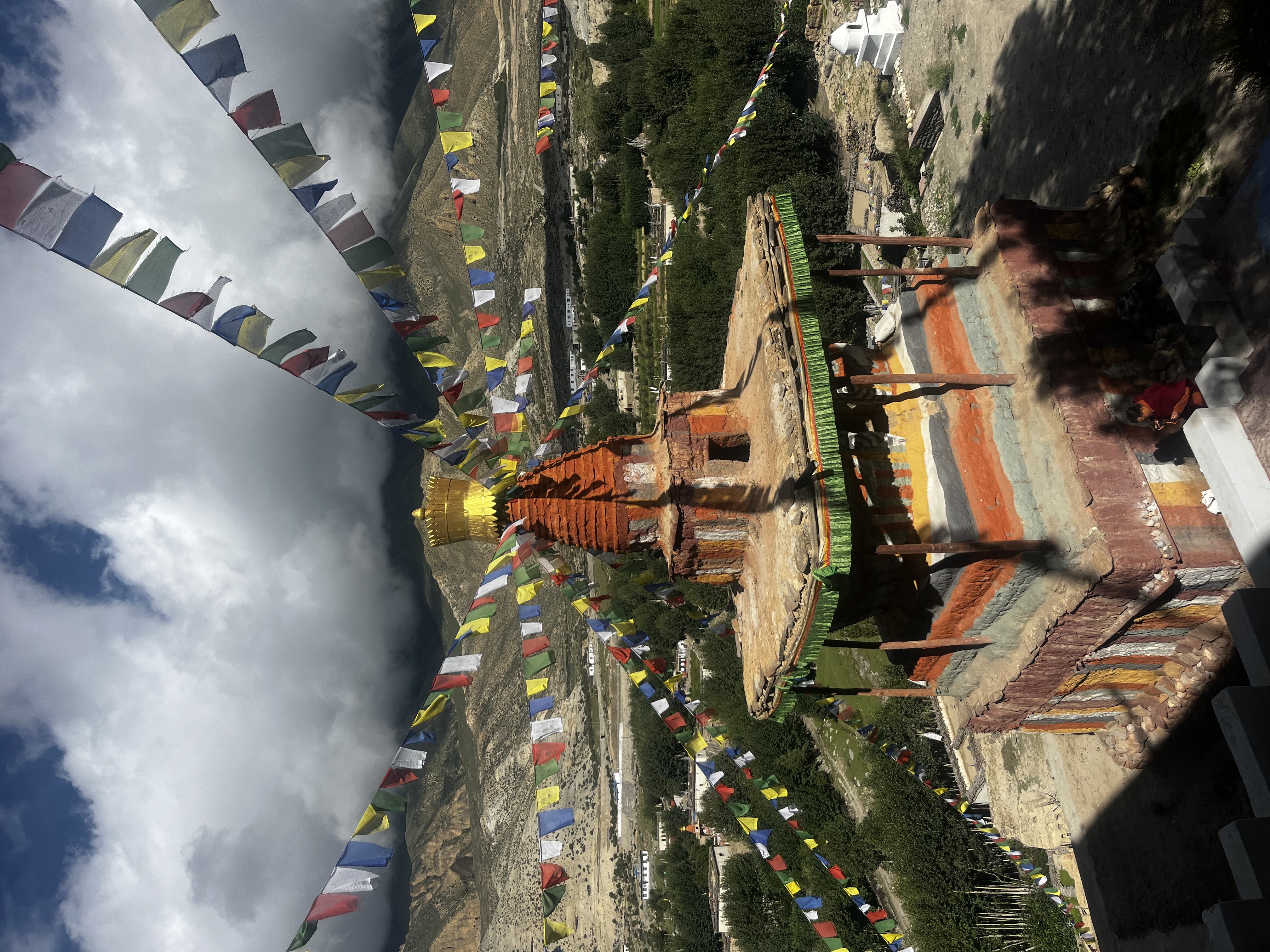
Many monuments, houses, monasteries and other buildings are painted often with four colours.
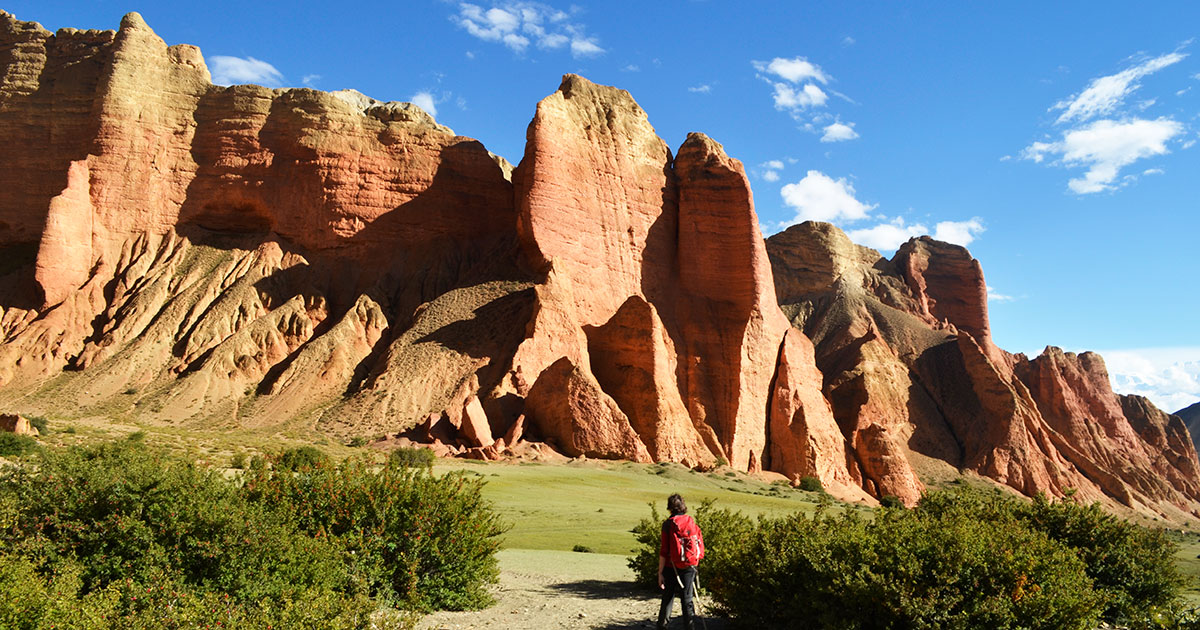
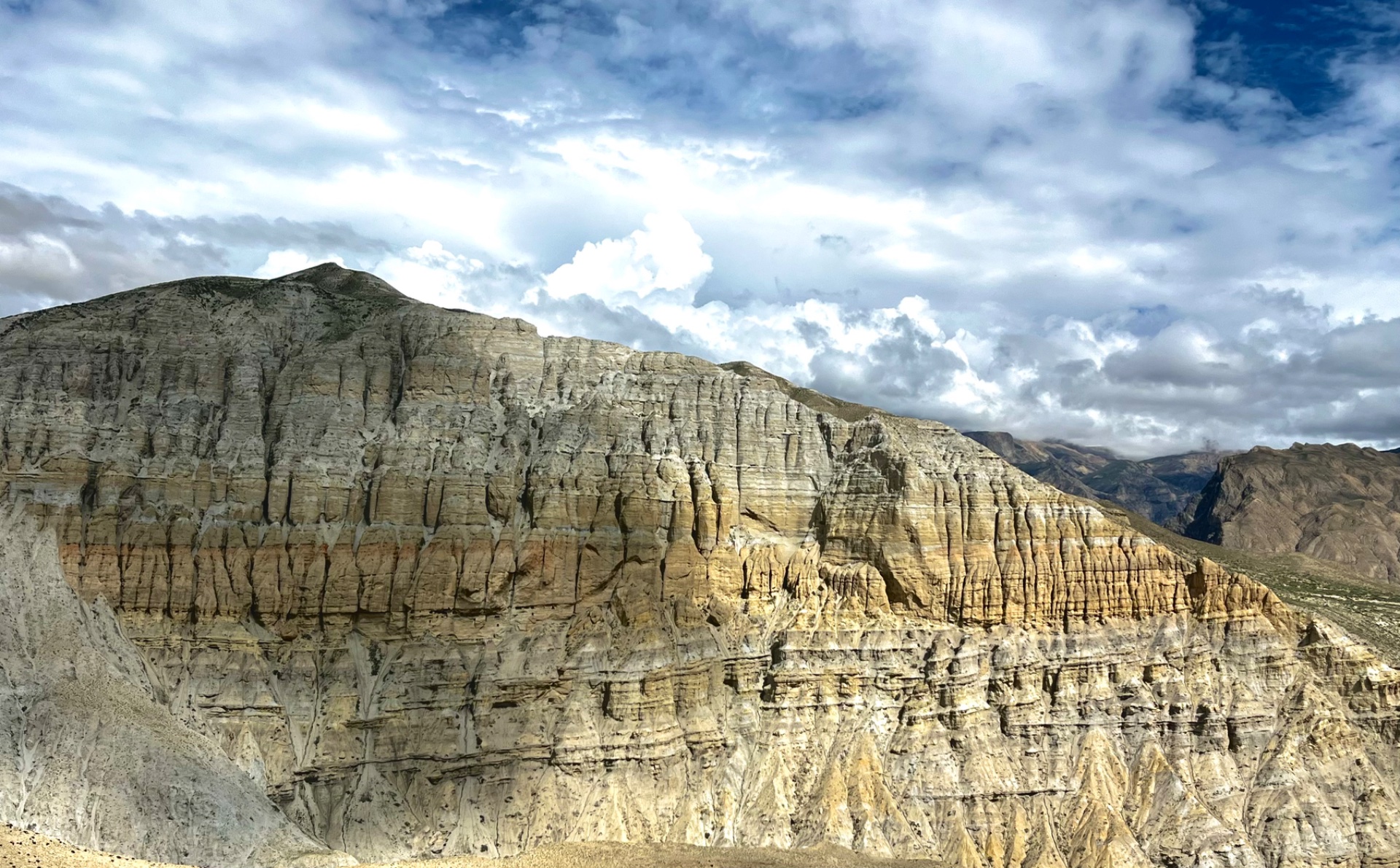
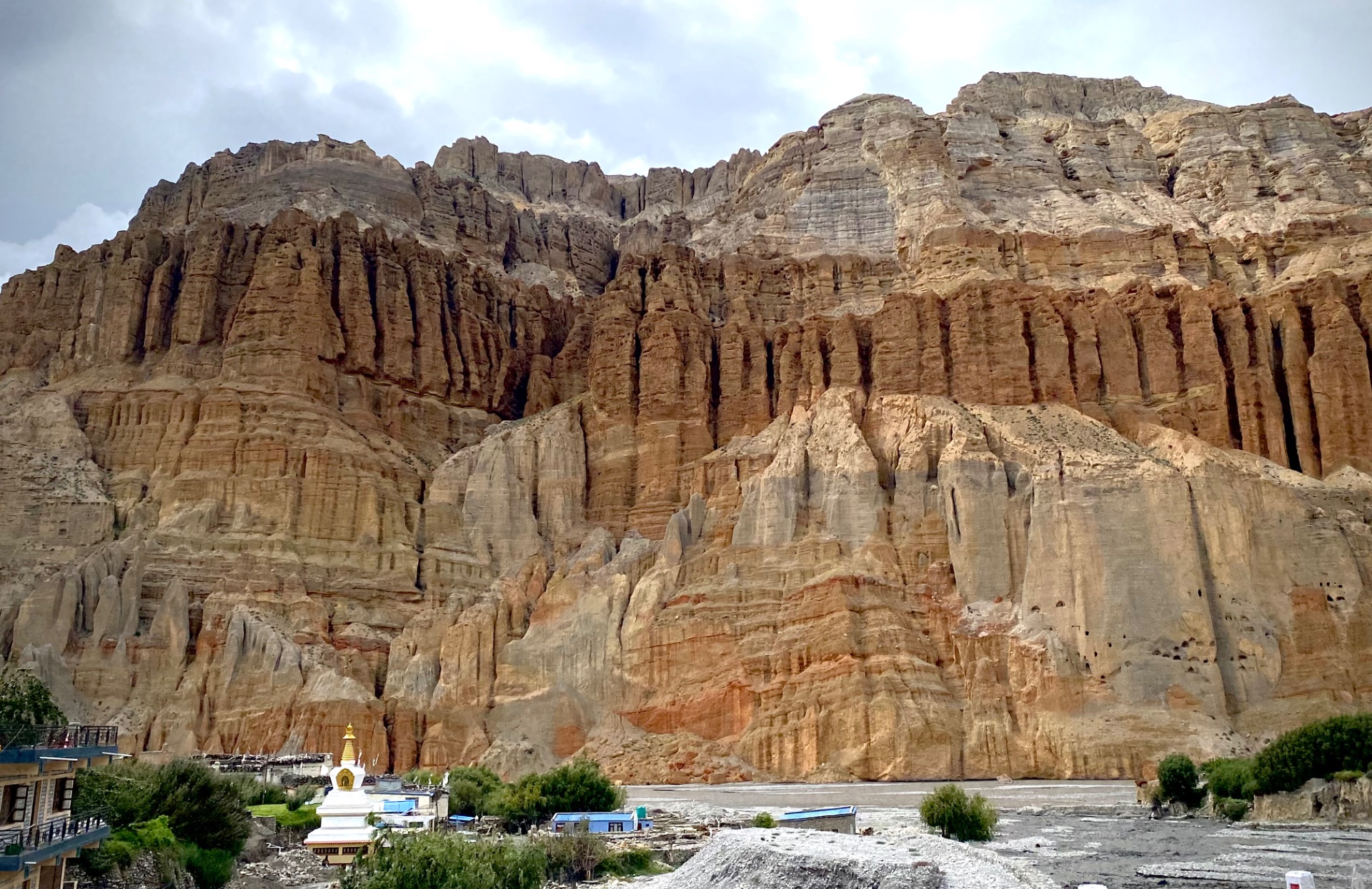
Those are natural mineral pigments they get from the mountains. It’s easy to see in the landscape mountains naturally shifting their colors:
Gray
Orange / Yellow
Red
White
NOTE
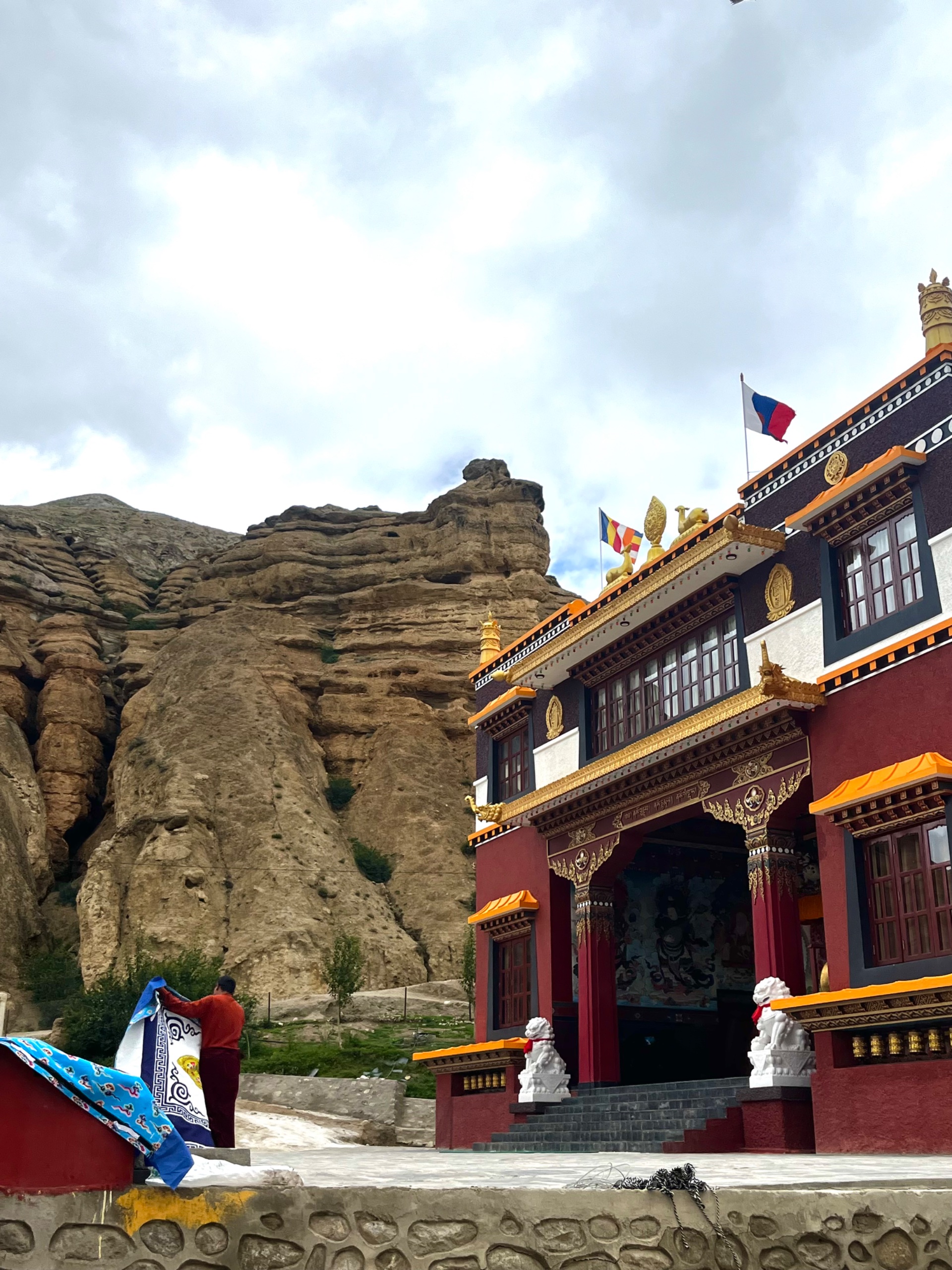
Usually monasteries use orange and red for their facades.
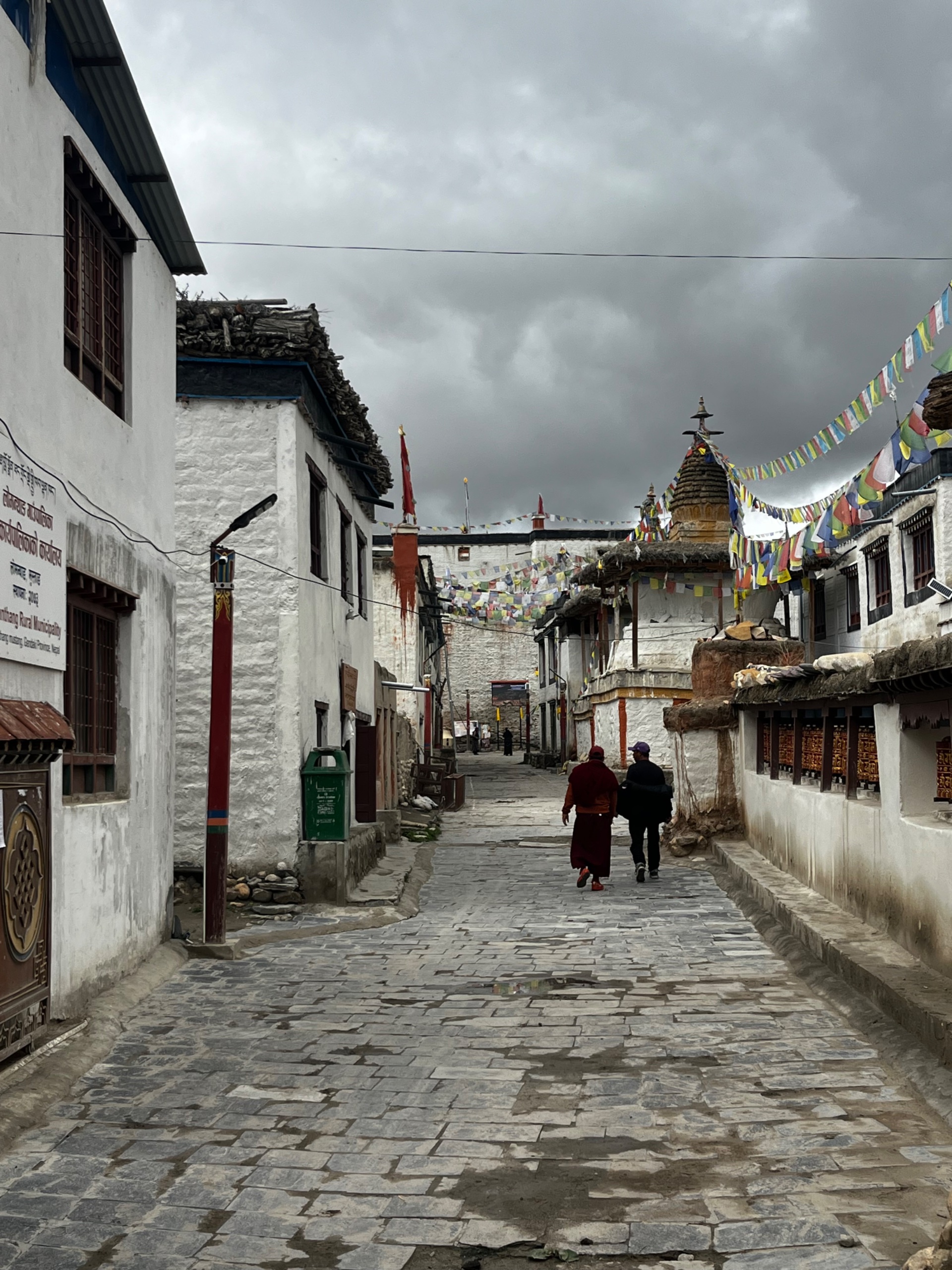
There’s a homogenous style in what concerns construction in Mustangi towns.
Walking Around Lo manthang
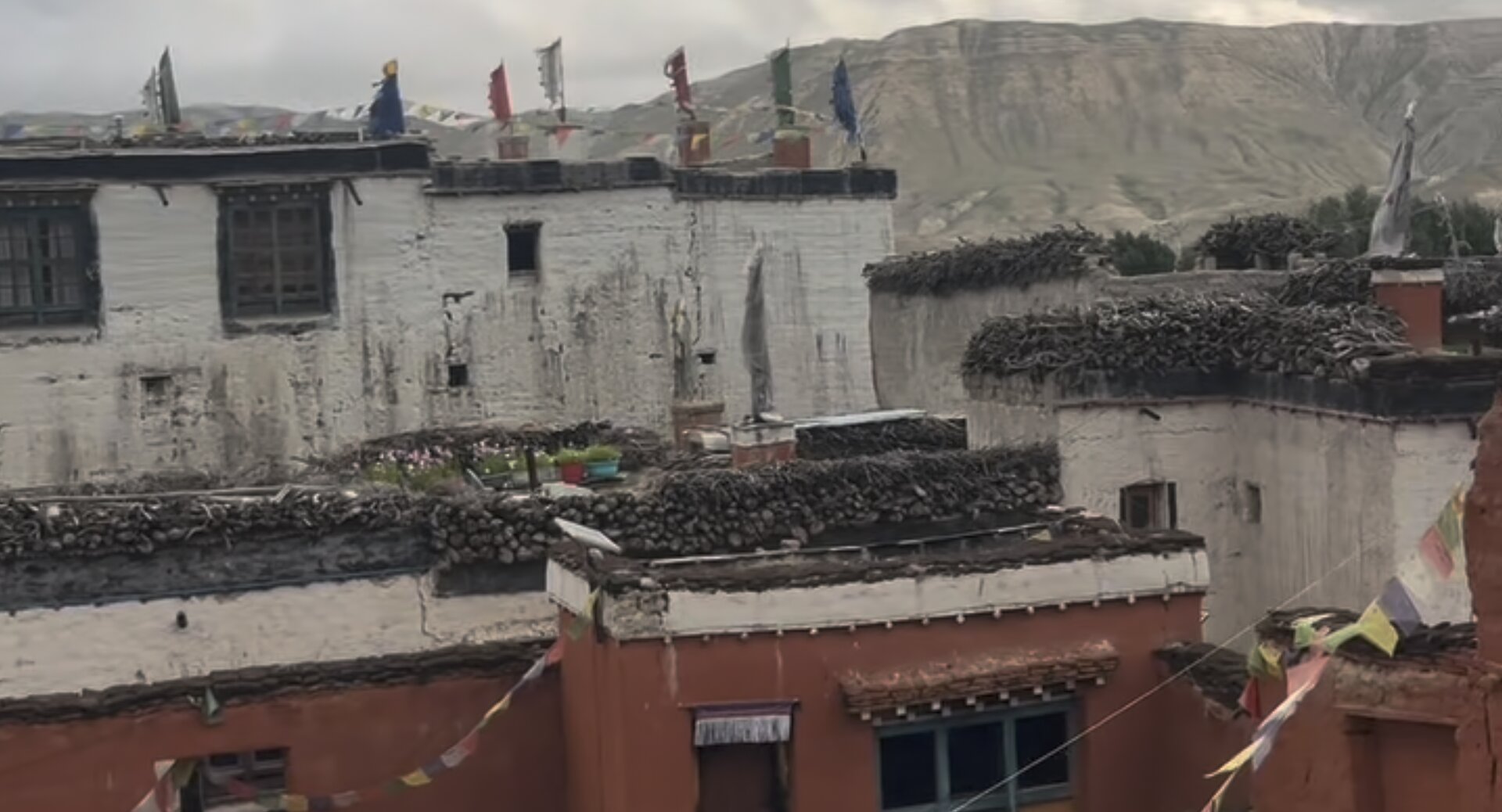
In the previous section on Mustang Mineral Pigments I showed the color palette seen on stupas, monasteries. Regular houses are covered in a white wash that reminded me of Santorini, but the purpose is different. In Santorini is to reflect the light, keep the interior cooler and to prevent infections; in mustang is to protect from the erosion of the winds, since mud bricks would be easily damaged otherwise.
Homes have an smokeless metal stoves (chulho in Nepali) in the middle of the dining / living room (serves both purposes). By burning yak dung, heat is produced to cook and to keep the space warm. They don’t use wood at the floors as I saw in Solukhumbu but instead they have a sort of pressed packed mud. Wood is scarce in Mustang as opposed to Solukhumbu.
Another iconic aspect of Mustangi homes: wood is piled on the rooftops. They serve as burning stock and insulation.
Recently high lamas from Lo Manthang requested to weekly celebrate Tibetan culture (mainly circle dances) in community on Friday — day 41st Sakya Trizin Rinpoche was born. It’s an initiative very similar to lhakar (white wednesday) but without the political aspect.
Here’s a video before I joined them. The steps look simple but I struggled to find the pattern and loop it.
Khenpo Ngawang Tashi tells me they started doing this very recently, perhaps June/July 2026.
Genetic Surprise
I see many Tibetans have a blue rim around the pupil.
todo Take picture of a Tibetan with such eyes, such as the souvenir shop owner in the Tibetan camp behind Pema Tsal.
What also surprised me is finding one Mustangi child monk that had blue eyes:
Temple Rules
No Photos
No photography is allowed in the shrine rooms. So I cannot share what impressed me the most from those places. You’d have to experience yourself!
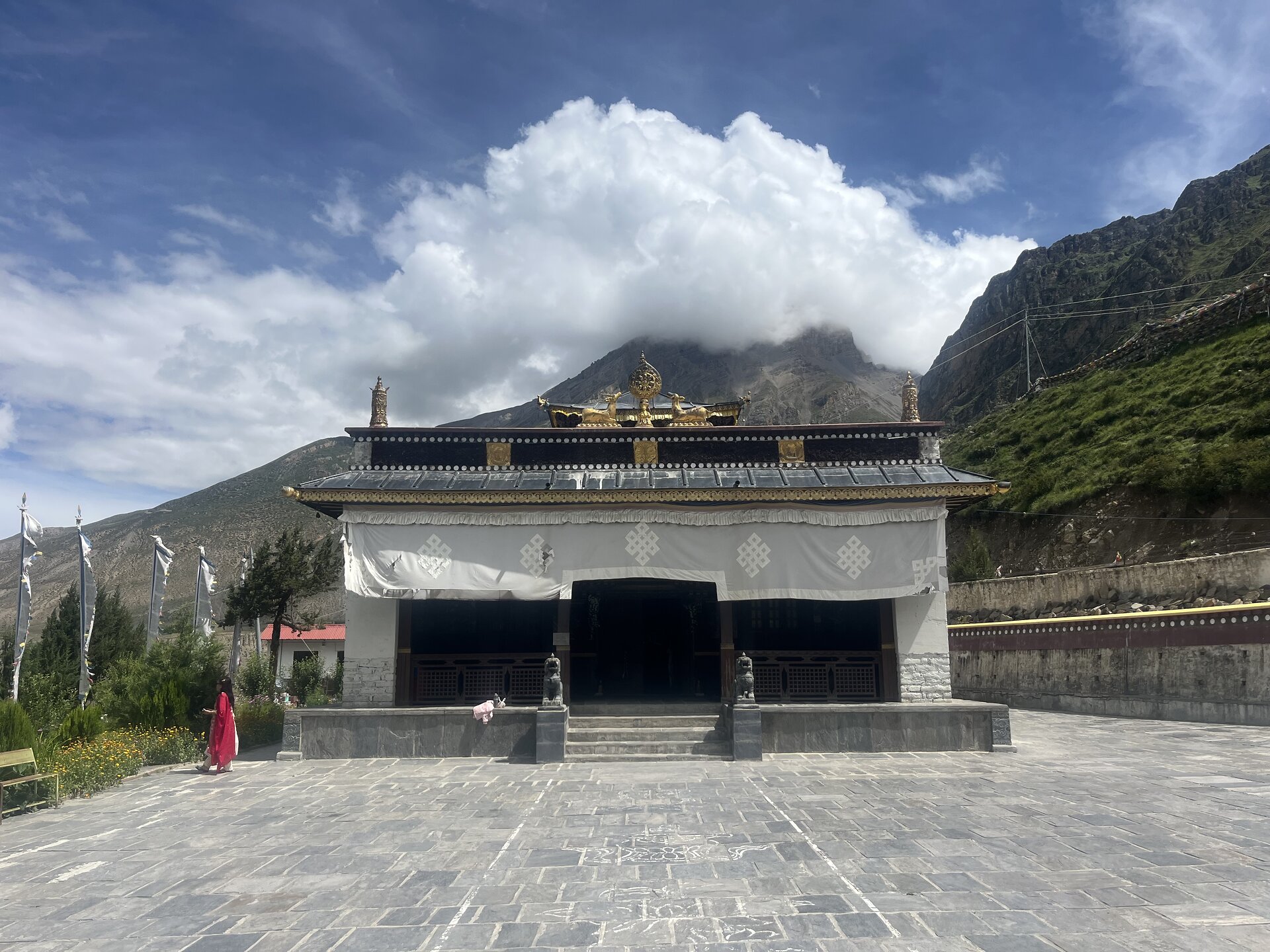
Nyiphug Namdrol Norbuling Monastery
Nyiphug Namdrol Norbuling Monastery
ཉི་ཕུག་རྣམ་གྲོལ་ནོར་བུ་གླིང་, often translated as “Sun Cave Monastery”.
Lowo Khenchen Sonam Lhundrub (1456–1532), a scholar of the Sakya tradition and a prince of a Mustang kingdom (yes, there were many) found a monastery in ruins. Next to it there were caves and he stayed in meditative retreat. Afterwards we decided to rebuild the monastery.
Now the monastery even has a guesthouse next to it:
Hermitage
Speech to Encourage Speaking Tibetan
Karma, the principal of the monastery invited us to have lunch with the community and asked me if I could run a Motivation Tibetan Speech for the small monks to encourage them to speak more Tibetan among them. He thought if a westerner that’s learning it speaks of how beneficial the language is they might take it more seriously than if the principal recommends them.
It has 3 floors. It’s very impressive because from the lower one you glimpse the massive statue of Maitreya — the Buddha to come in the future.
When entering the gate to the lhakhang (temple room) on each floor there’s an intermediare space, and then you must cross another door to get in. That naturally produces an inner corridor, a perimeter around the temple which we would do kora (circumambulation) before entering.
The kora is very dark, so we used our phone’s torches to check the murals. Some holes resseambling european fortress arrow slits let some beams of light at intervals. It’s damp because the walls are made of mud or clay.
From the second floor direct view of Maitreya. Visiting this temple them builds progressively the experience of contemplating the figure.
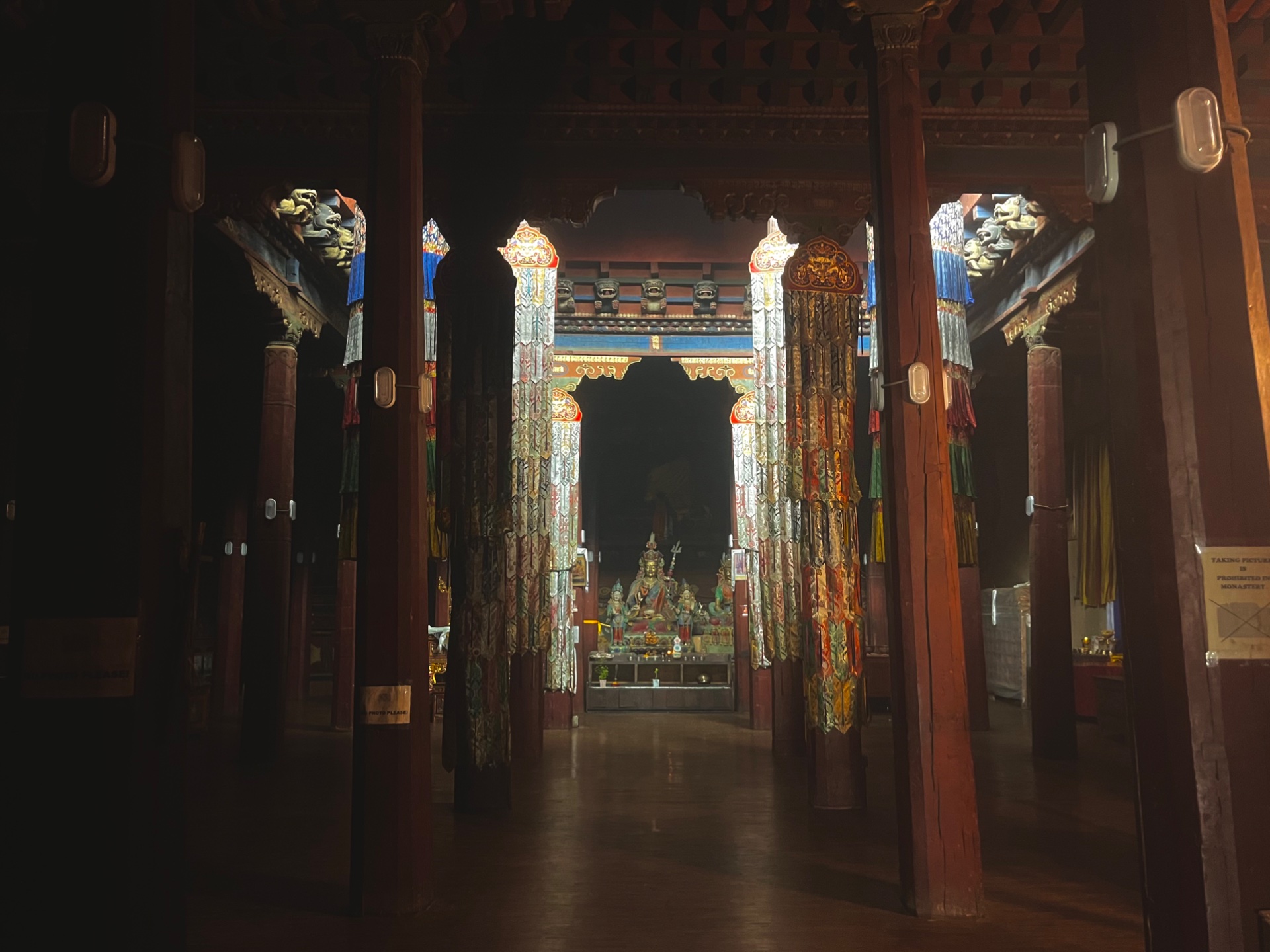
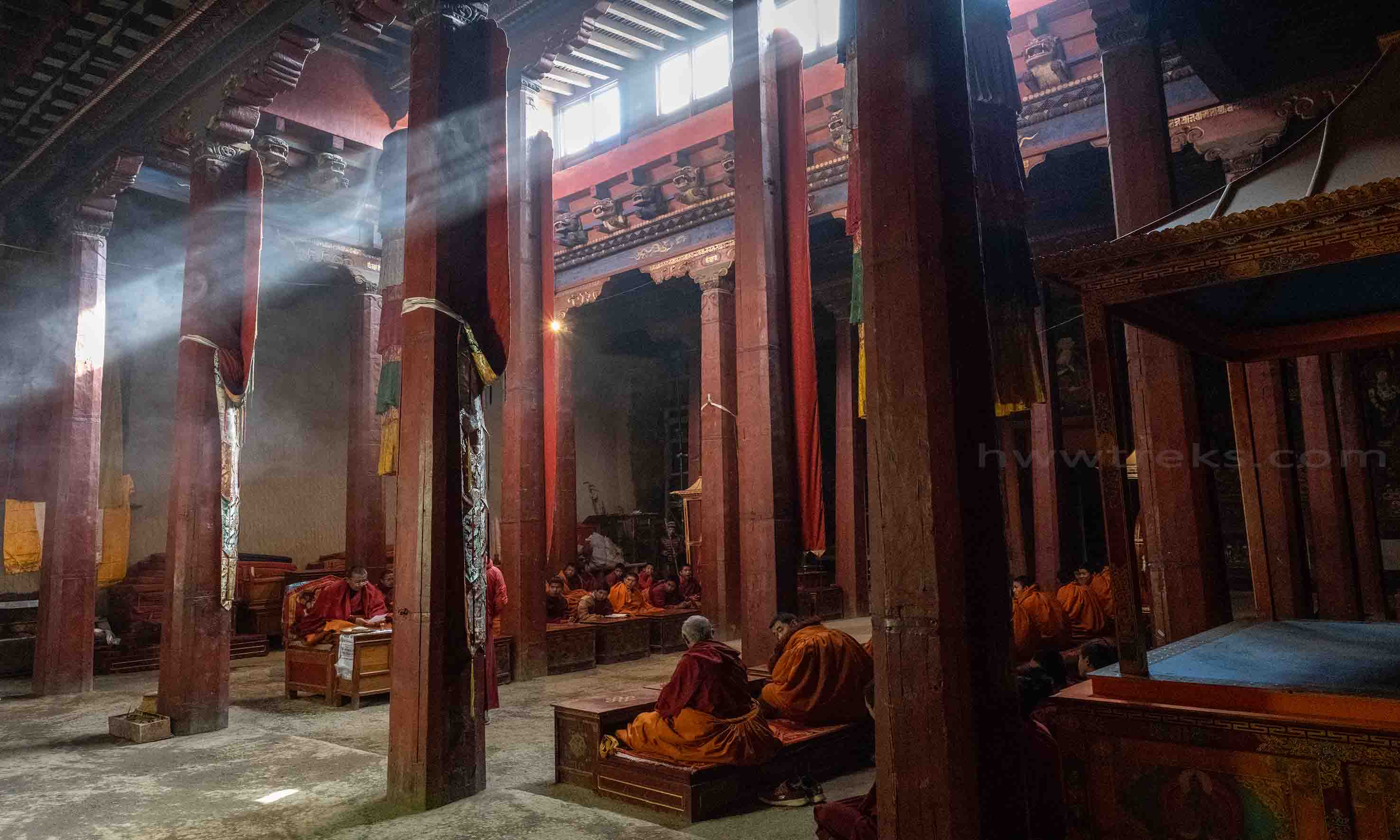
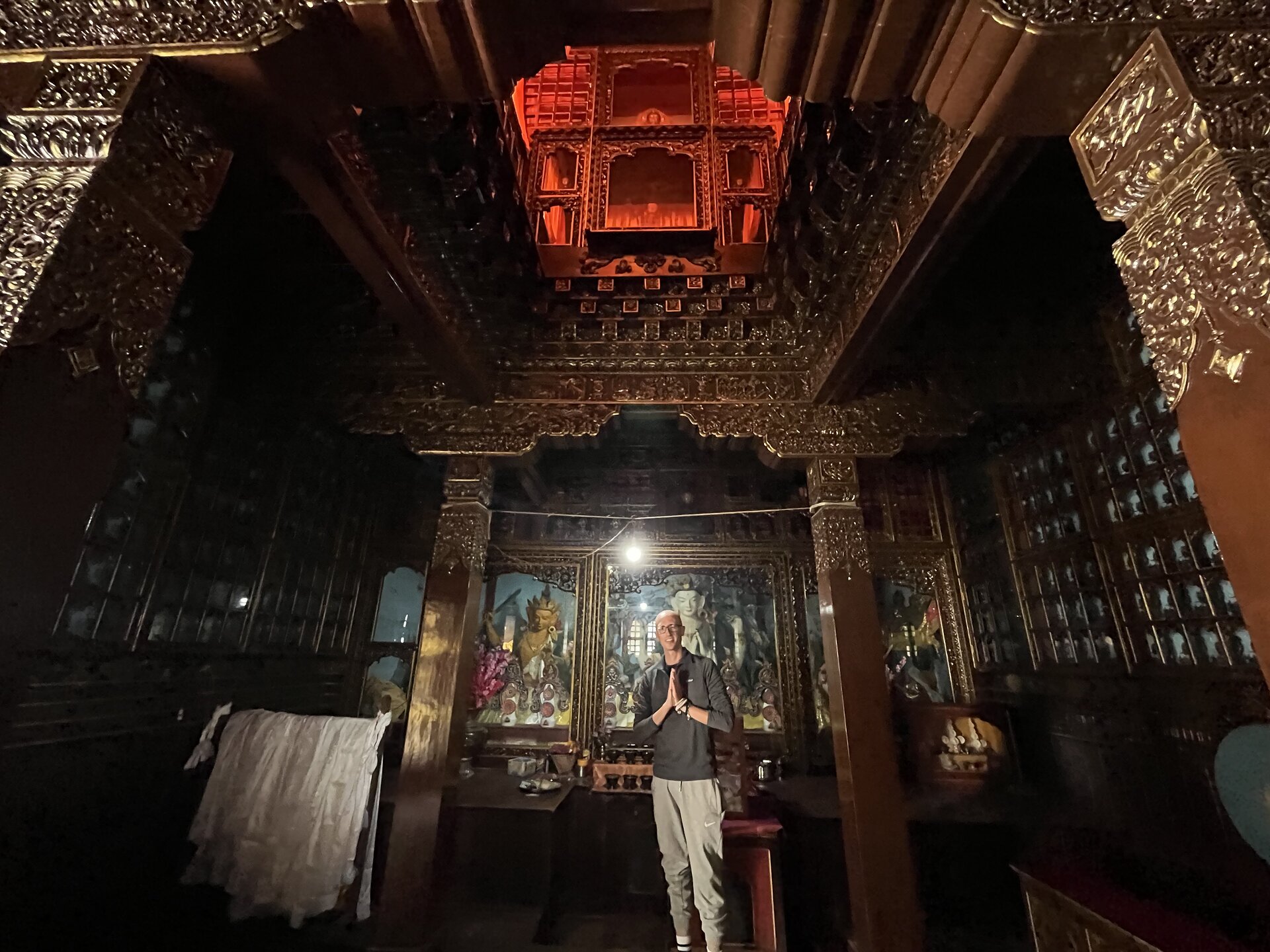
The atmosphere you feel when entering old shrine rooms like those is special, the darkness of the wood, the directional light beams from the entrance, the smell… From the entire Mustang Trip this and Lo Ghekar Temple are the ones that impressed me more.
Inside of the monastery
Lo Ghekar Monastery
Lo Ghekar Temple
This monastery has a lot of significance in Tibetan Buddhism and it’s a powerful pilgrimage place. Without it Samye Monastery in Tibet would not have been completed.
The Legend
The story tells that during the construction of Samye Monastery during daytime progress would be made only for night time to be lost: a denma (female evil spirit) would keep destroying parts of the monastery.
They asked Guru Rinpoche — since he was well experienced with spirits — for help. He accepted. He found out the spirit would be running away to other areas constantly, he would need to go to Mustang to fight her.
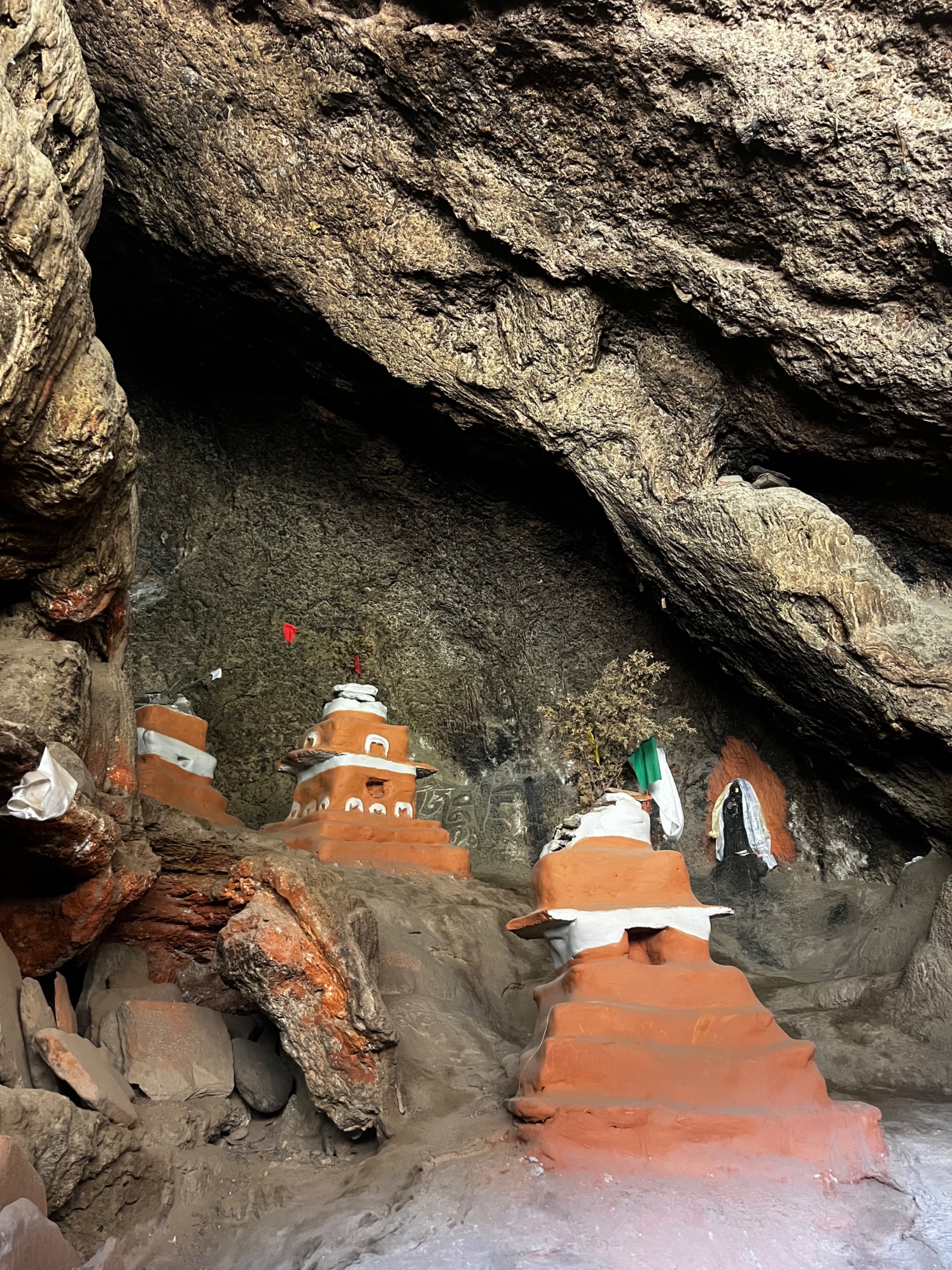
He set off journey to mustang, stayed in places such as Chhungzhi Rangjung Cave, Muktinath, and others, where he would meditate along the way.
Finally found the evil spirit and killed her. He spread the remains:
Splattered over the mountains near the Ghami village.
Intestines
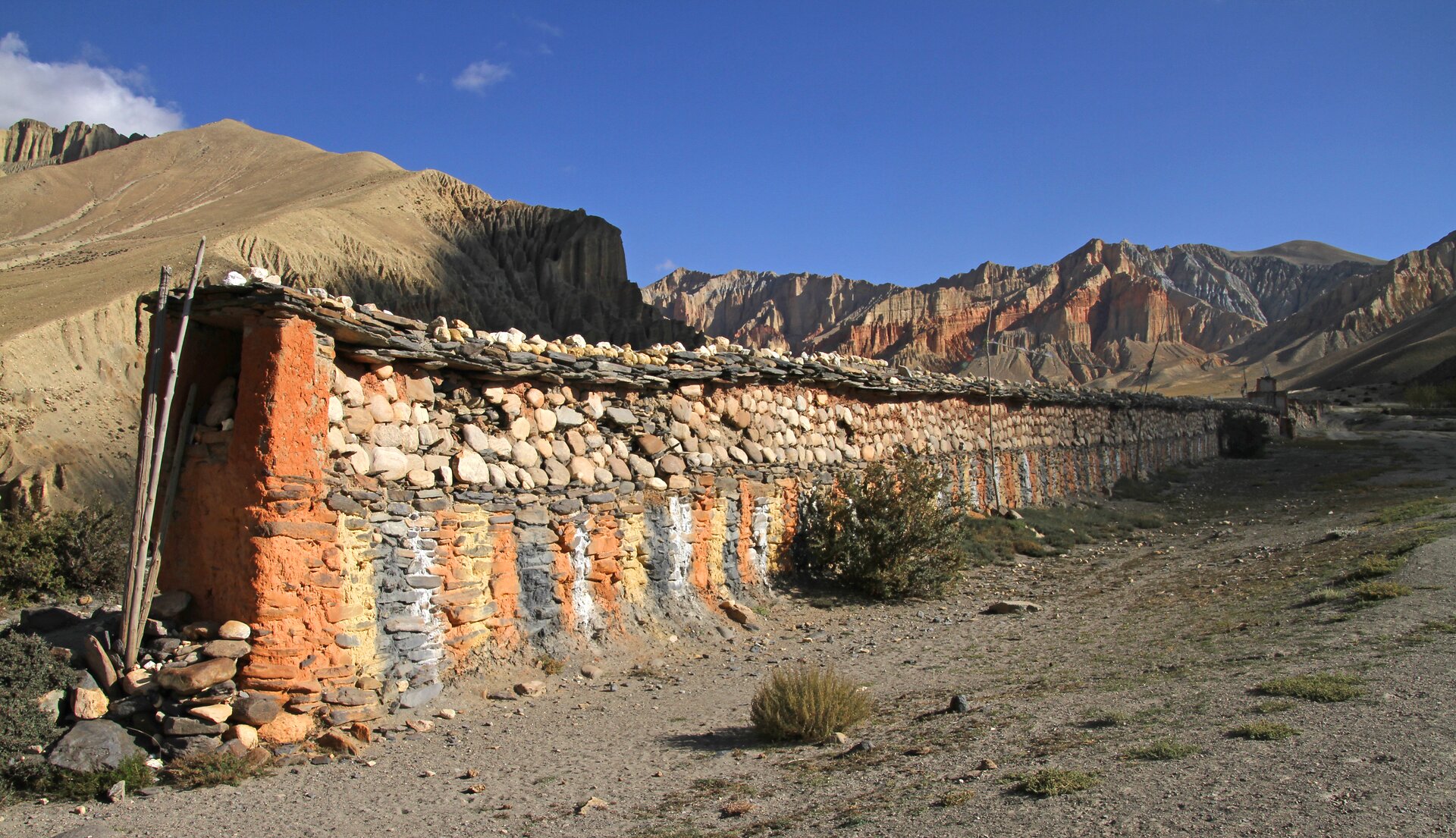
Underground, protected with many stonewalls near Ghami village.
The mani stone wall protecting the intestines and the blood splatters on the red mountains behind
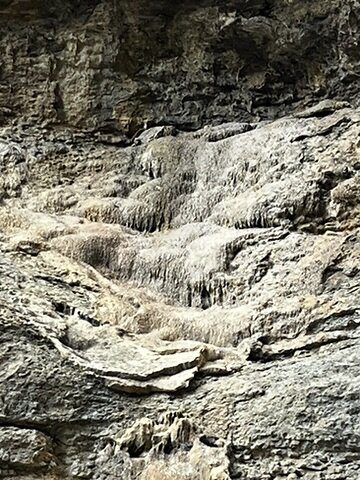
Landmarks such as the ones below also are explained through that story, in this case it is said that those rock formations are the vomit of the spirit.
Rock formation showing the vomit of the evil spirit
Inside
Since it’s said to have been built by Guru Rinpoche the monastery then is really old, and the image of Guru inside is very precious because it’s probably closest to what he must have looked like.
It’s sad no pictures were allowed, but the experience of entering such old temples are very special. To feel the glossy old wood, the irregular clay walls, the claustrophic spaces with practitioners reciting mantras and the smell of the butterlamps, boosted by devotion to Padmasambhava. I am lucky that I came here with a monk “If you want to practice, spend some time” — tells me.
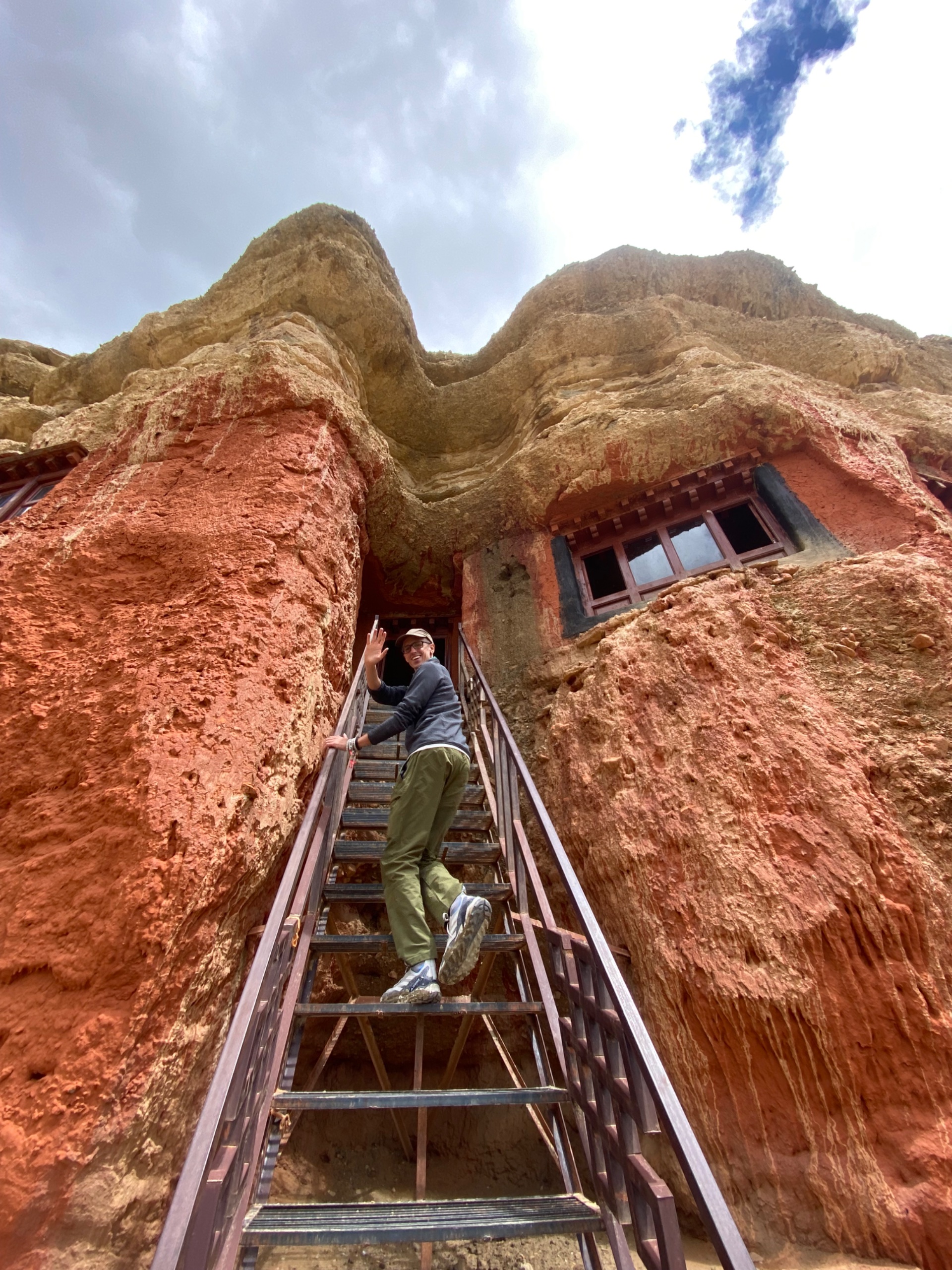
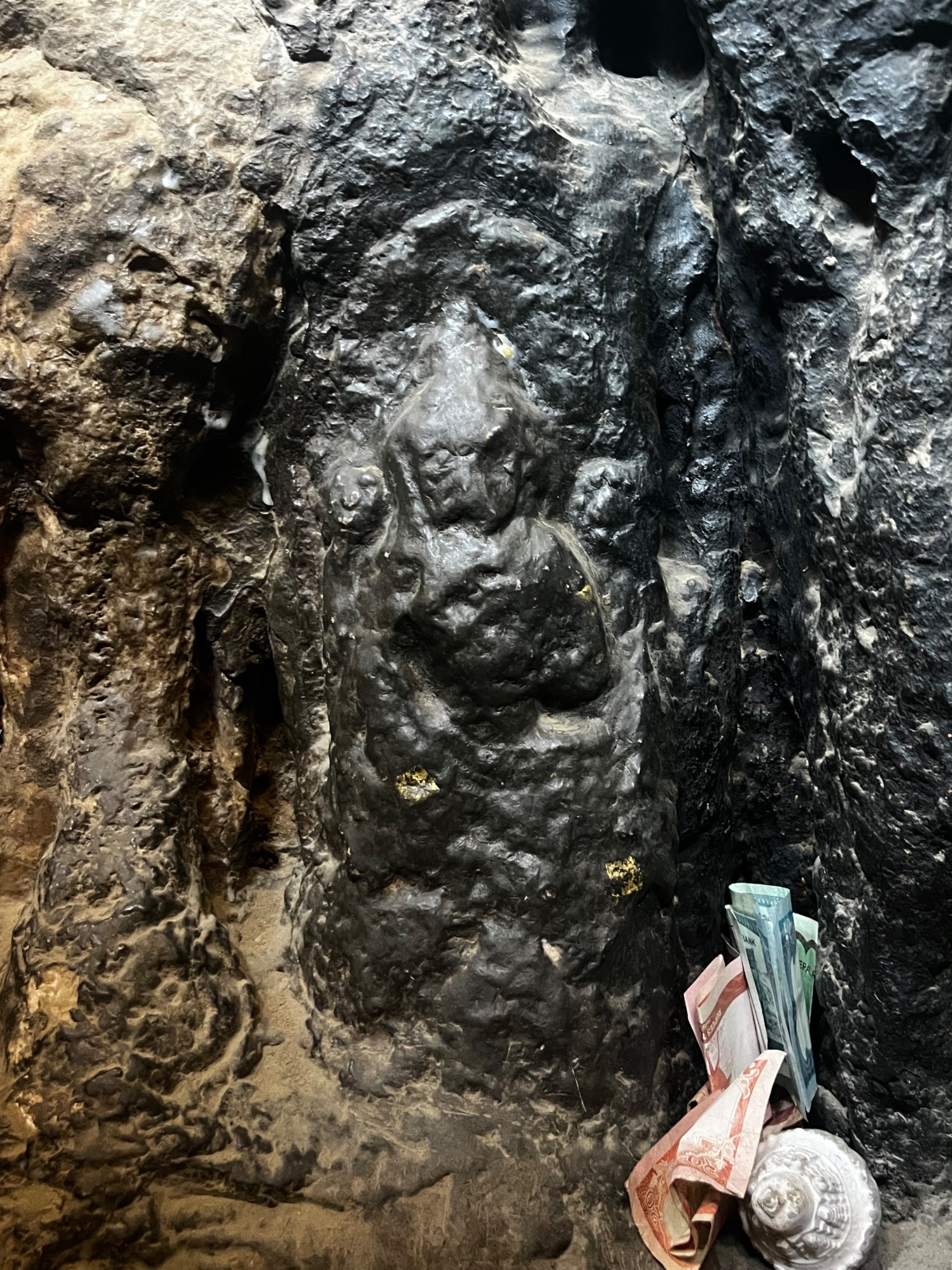
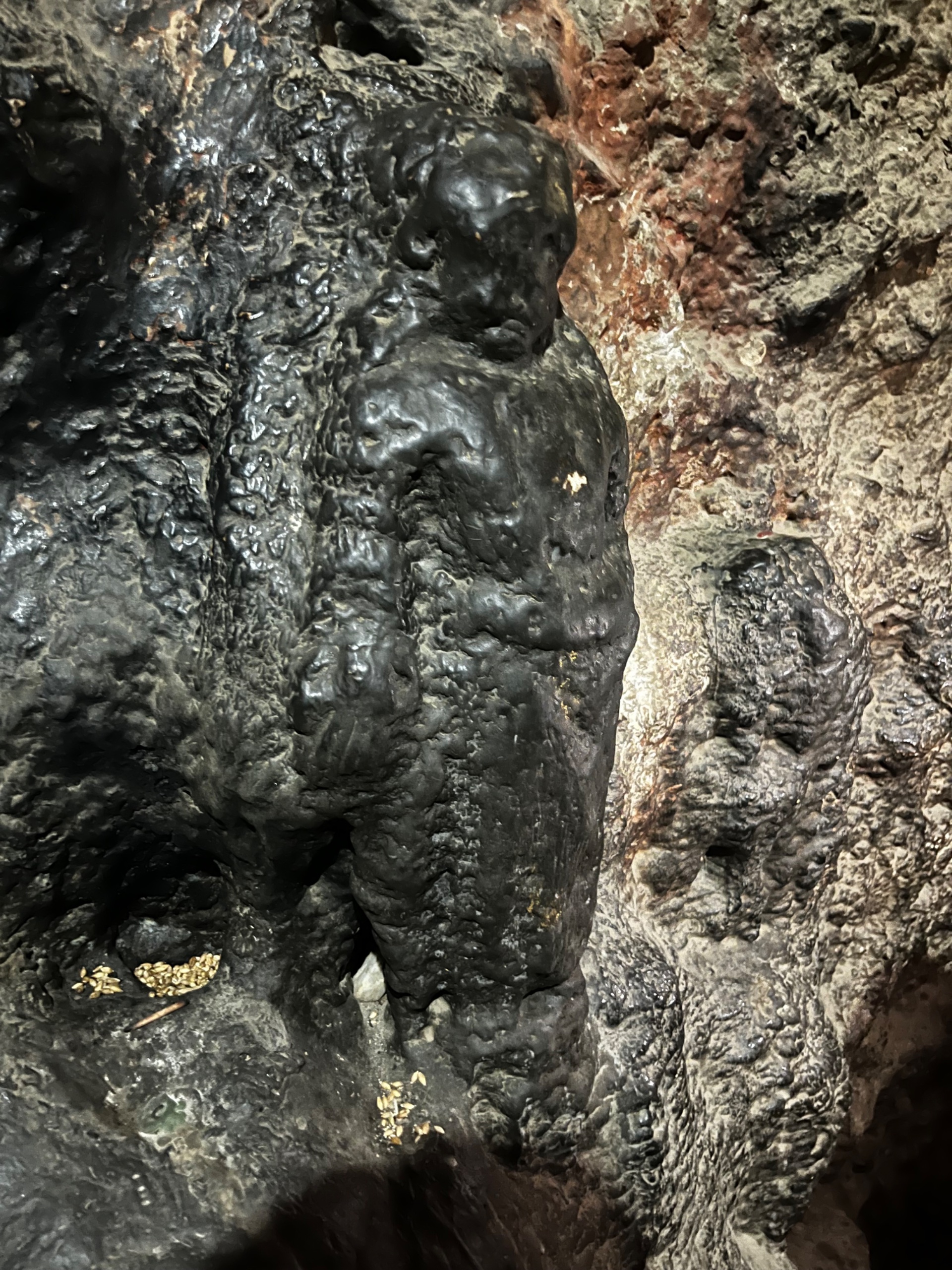
Caves (3; at different heights; third one not visitable) with naturally emerging shapes of deities, where Guru Rinpoche used to meditate. Now sits a shrine to Padmasambhava, and a humble residence for the monk (lama Ngawang at the time of writing of this article) that looks after the place.
The path to the cave offers spectacular views of a sort of a canyon the river creates, so I would recommend it even to people without an interest in Buddhism.
At the base there’s a small brick wall that delimits an area where subterranean blessed water can be extracted and drank to heal general health problems.
Statues
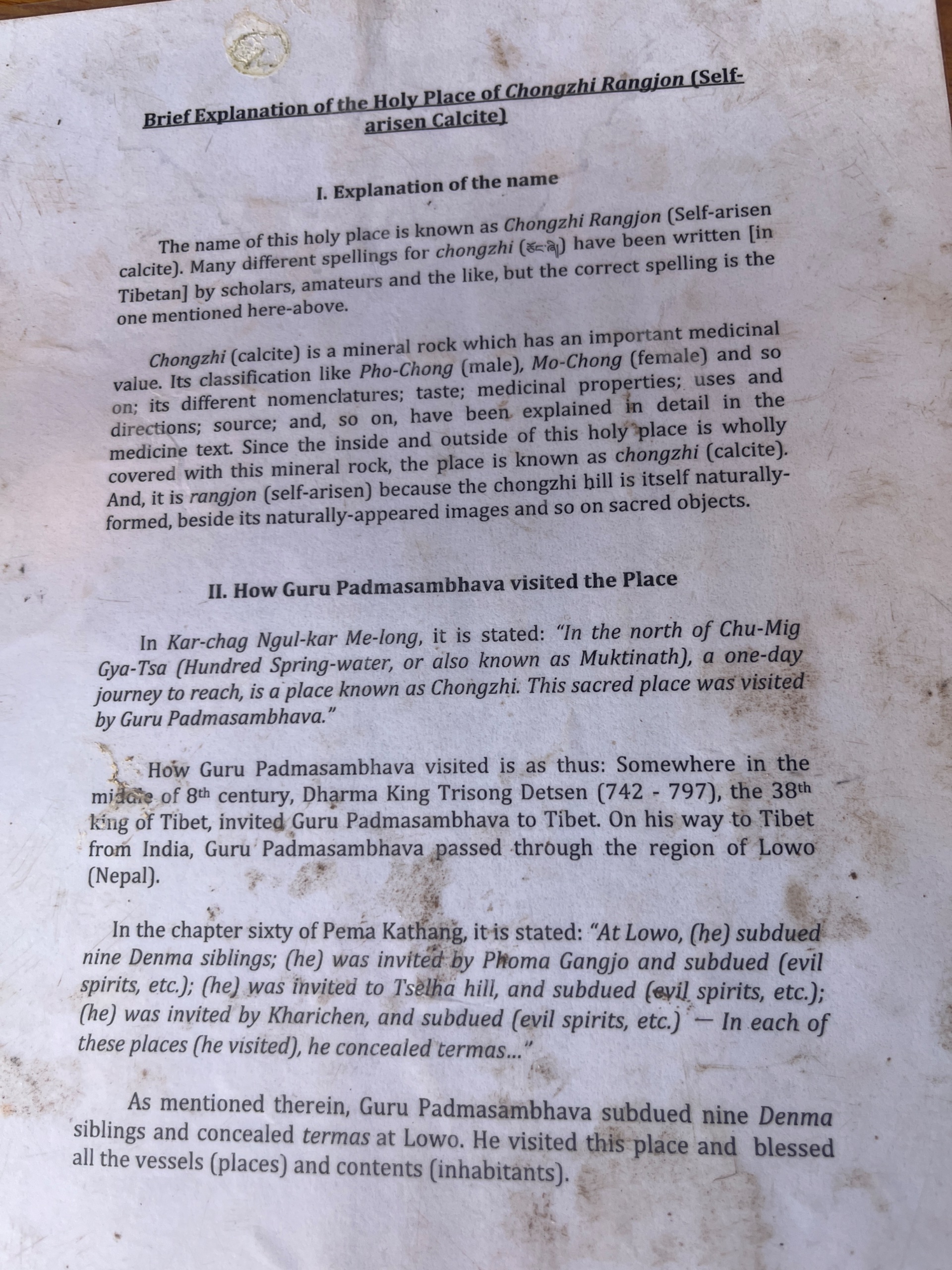
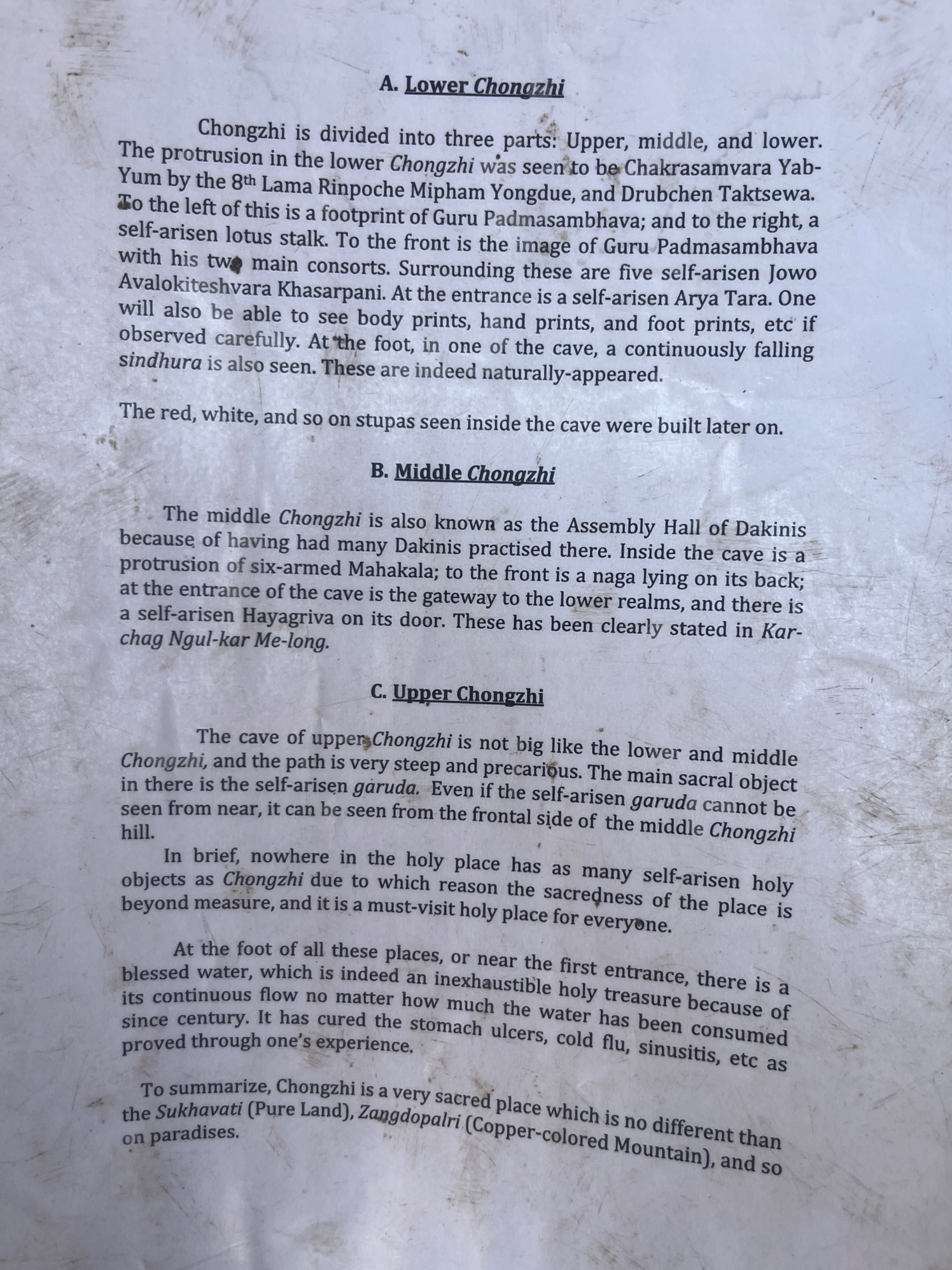
Informative Leaflet
This is the informative leaflet that was on site, which to me was too Buddhist for the general audience:
Small monastery that currently has 7 monks, of which most of them are studying in India.
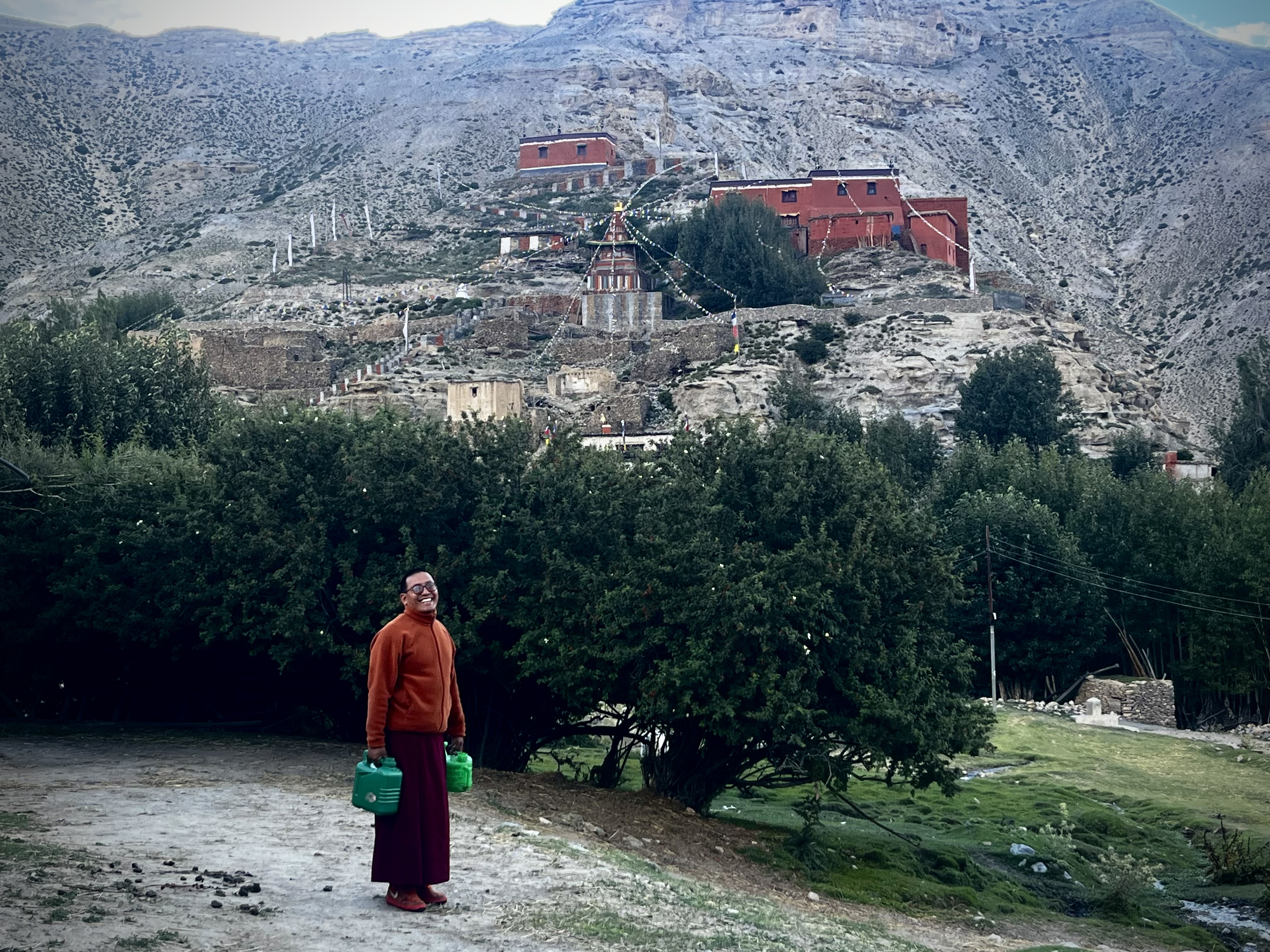
Khenpo Ngawang Tashi and the Ghiling Monastery
The villagers asked for a khenpo to bring back the monastery to life: renew it, set up a school, guesthouse, advertise it, … And Khenpo Ngawang Tashi has been appointed for it.
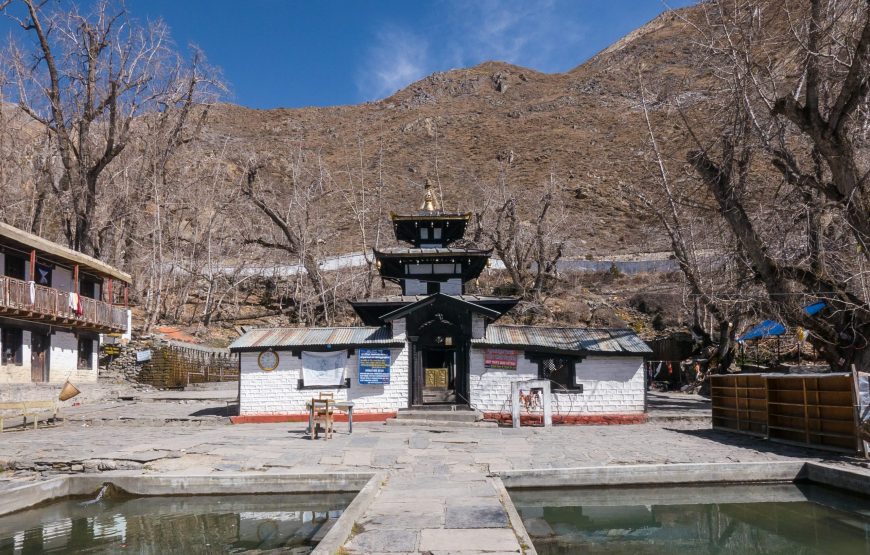
Area with various temples workshipped both by Buddhists and Hindus.
The Hindus see it as the abode of Vishnu. And for Buddhists it’s seen as a land where daikinis and Guru Rinpoche meditated (Hundred Watersཆུ་མིག་བརྒྱ་རྩ་)..
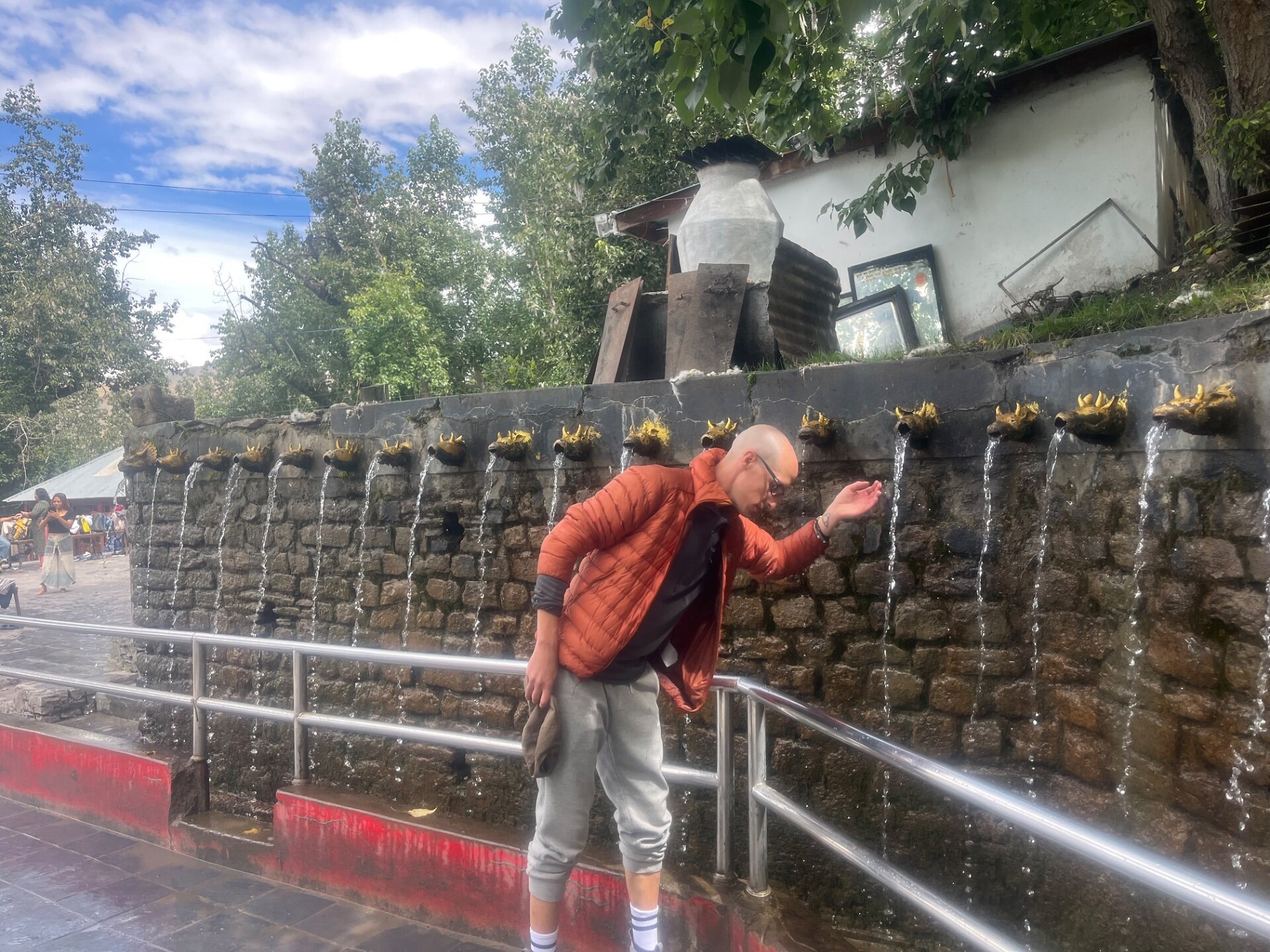
The element of water purification is present: there are 108 water taps arranged in a semicircle as well as two ponds. Devotees run under the extremely cold 108 waters and then dio into those ponds — one for Lakshmi (wealth, prosperity) and one for Saraswati (wisdom). After “having washed impurities” or “sins” they cloth and proceed into the temple.
I was not so brave to pass underneath
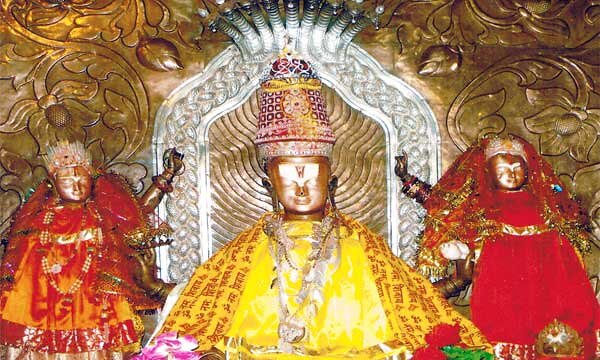
In the main shrine the statue seen is a human figure sat in lotus pose. For Hindus it’s Lord Vishnu, the preserver of the universe, while for Buddhist it’s Chenrezig, the bodhisattva of compassion.
No access was allowed in the statue room, you could only see it from a window. Behind the window there was a Buddhist nun taking in the donations and giving blessed elements such as rice, natural pigments or cloth stripes devotees would apply on.
Jwala Mai (Tib. སྒྲོལ་མ་མེ་འབར་) temple has a small shrine, underneath of which the “ethernal flame” can be seen. Lit by natural gas coming from the earth. Some water can also be seen. The smell inside is quite strong (very sulphuric — like that of rotten egg). It can be seen also as a culmination of the 4 elements: earth, water, air, space.
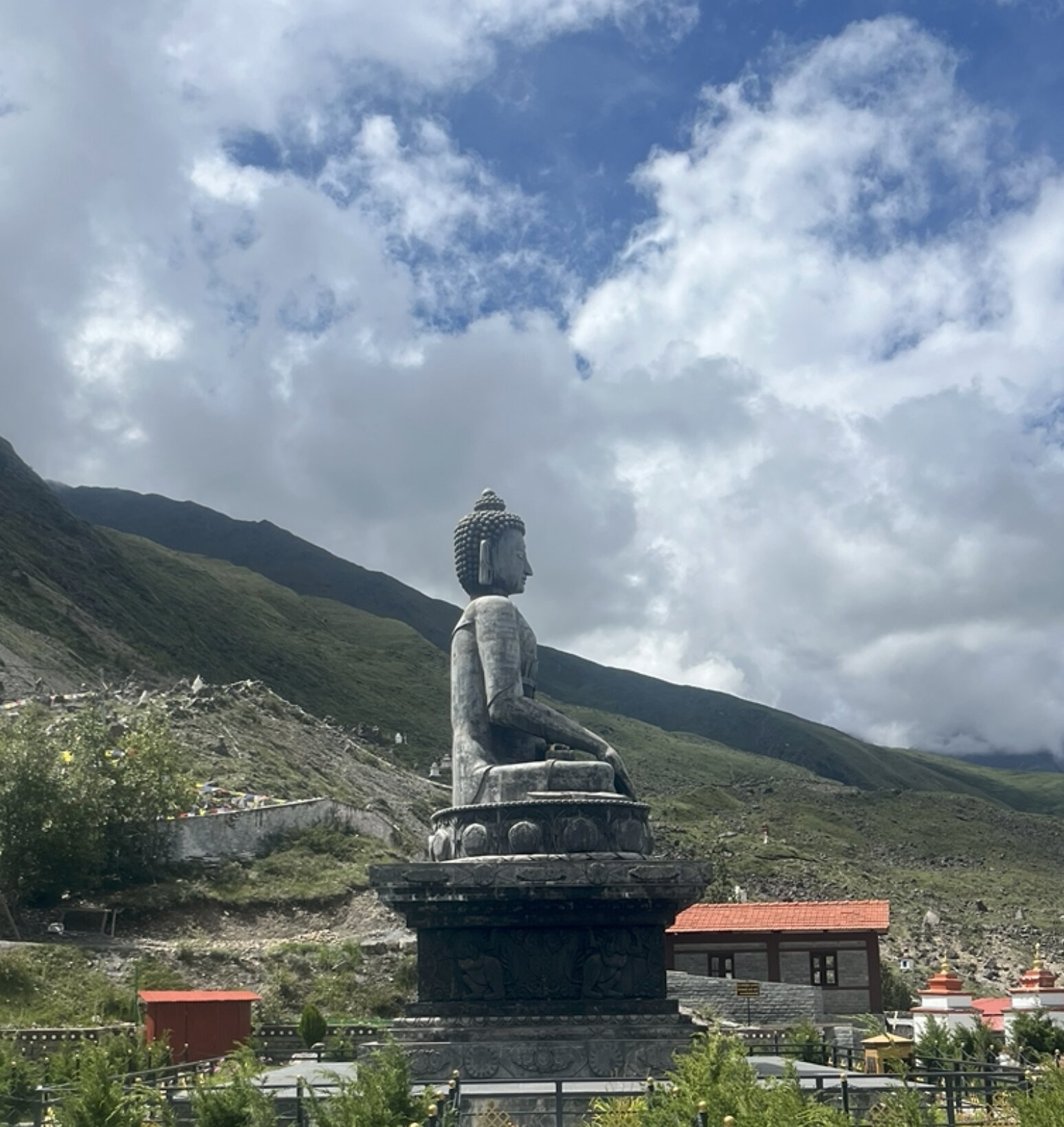
Nearby there was also a Buddhist temple to Guru Rinpoche with a very old Padmasambhava statue and a park with a big stone Buddha Shakyamuni statue.
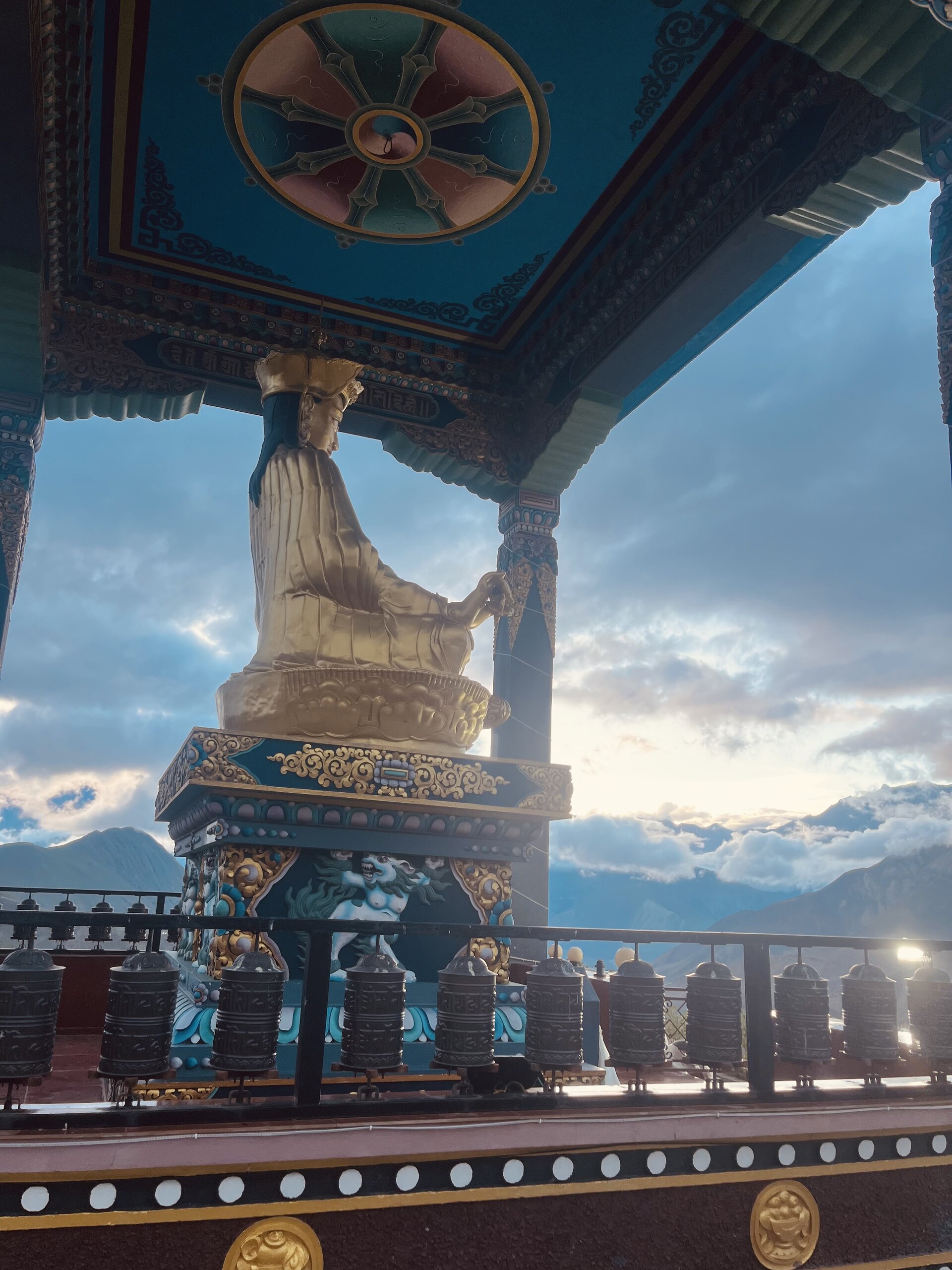
Outside of the temple complex there’s a big Guru Rinpoche statue with nice views very suitable for practice.
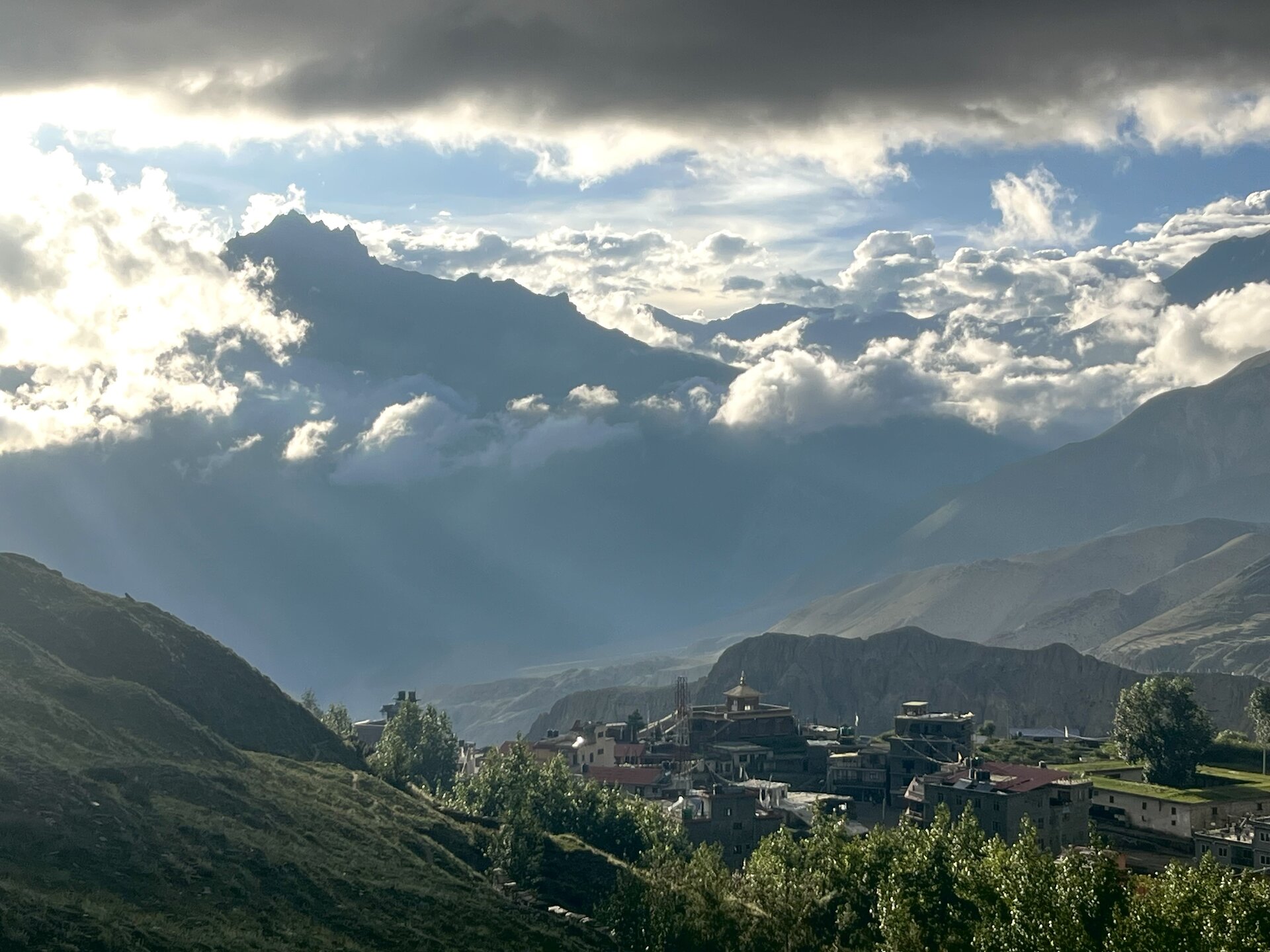
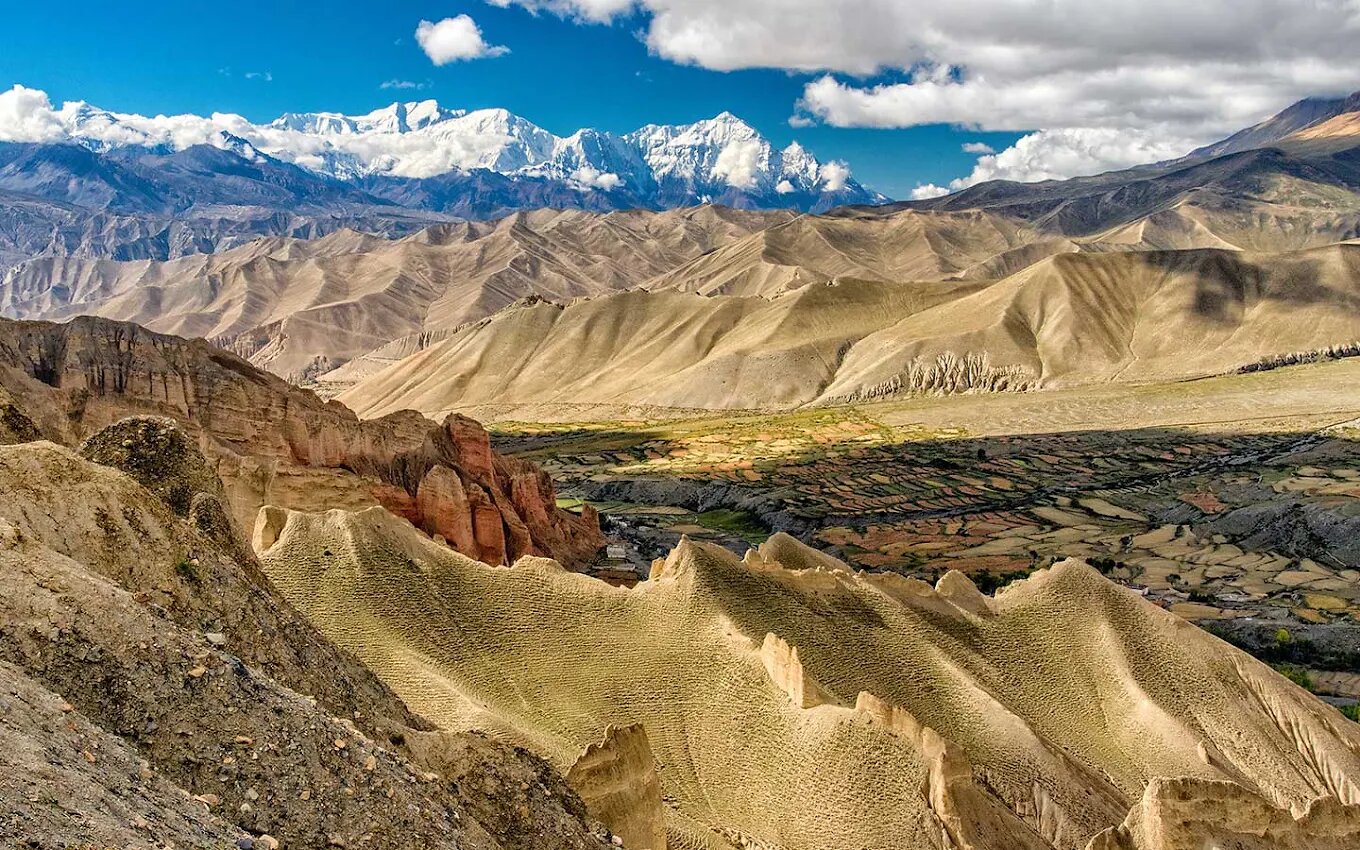
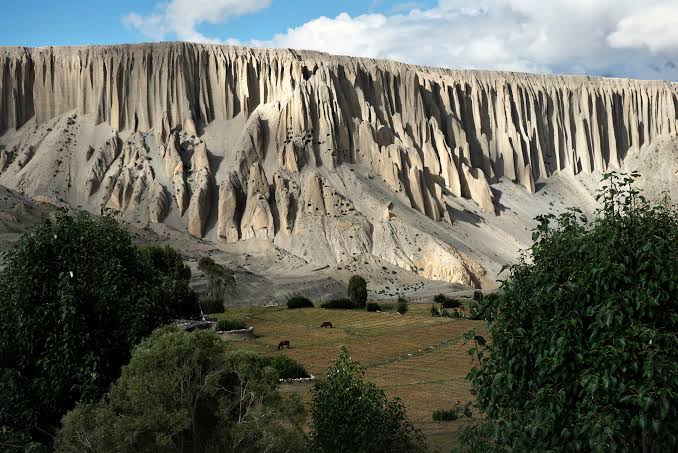
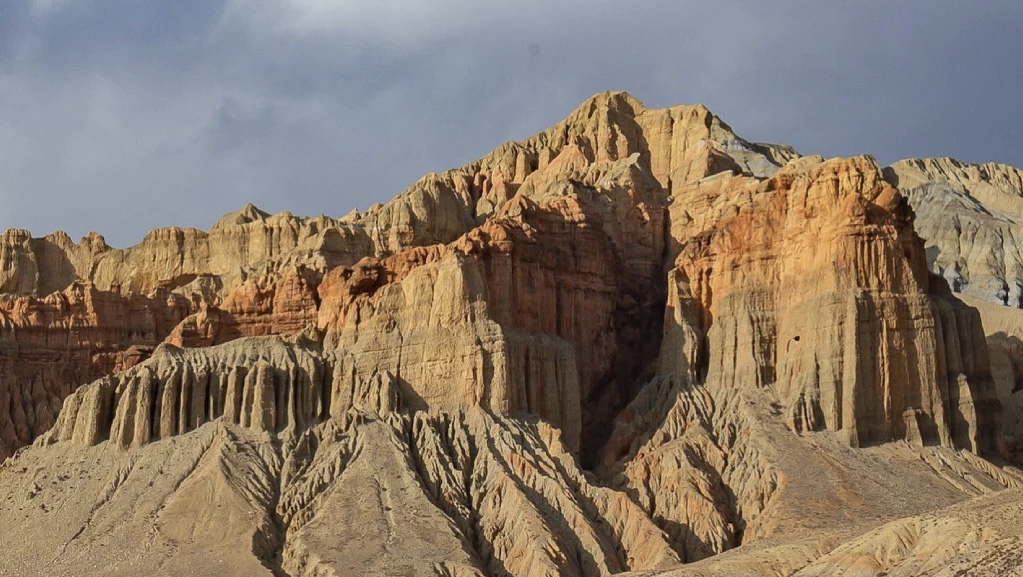
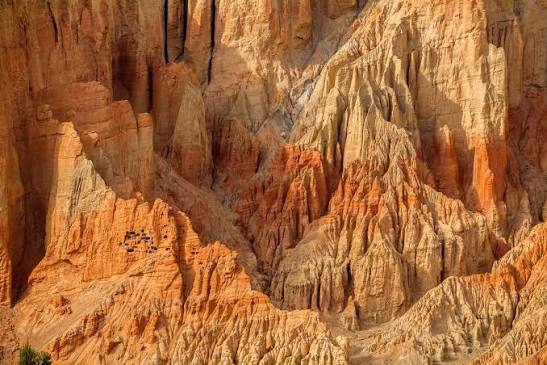
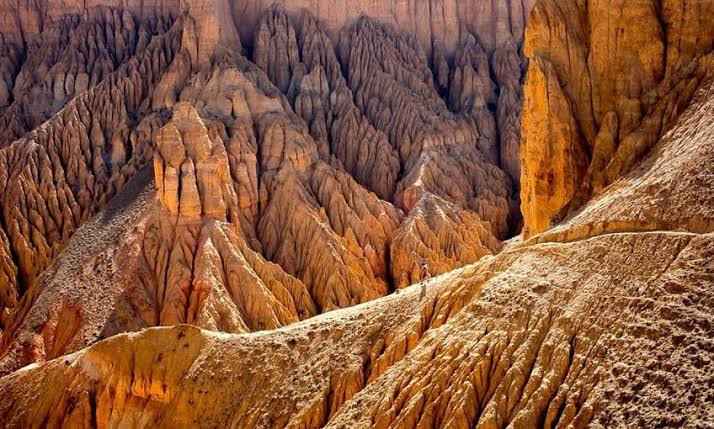
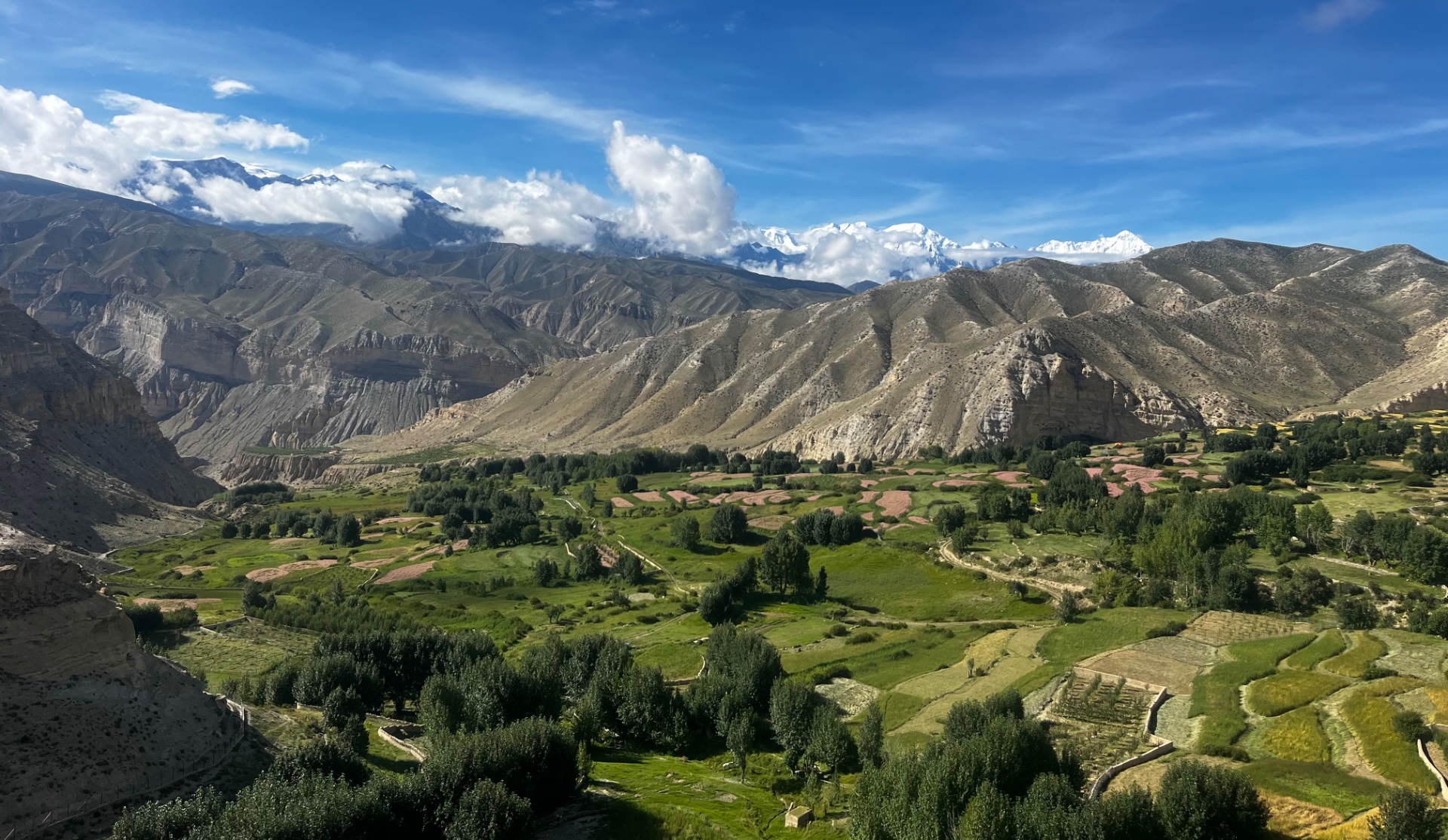
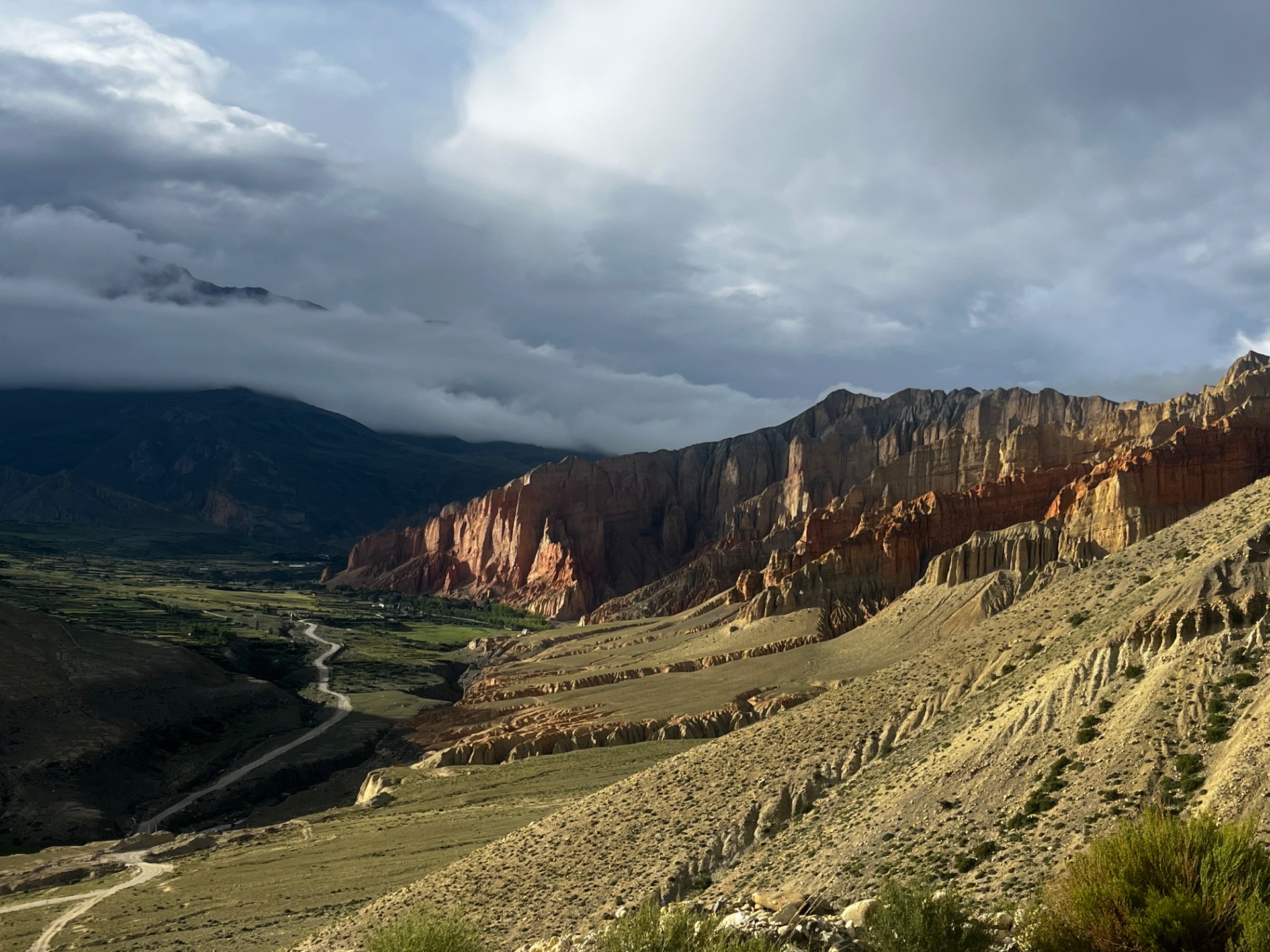
Mustang’s mountainscapes are ones of the most interesting I have seen. It’s surreal cloth-like shapes caught my attention so much I created this note to mix photos from the internet as well as mine’s.