There’s a homogenous style in what concers construction in Mustangi towns.
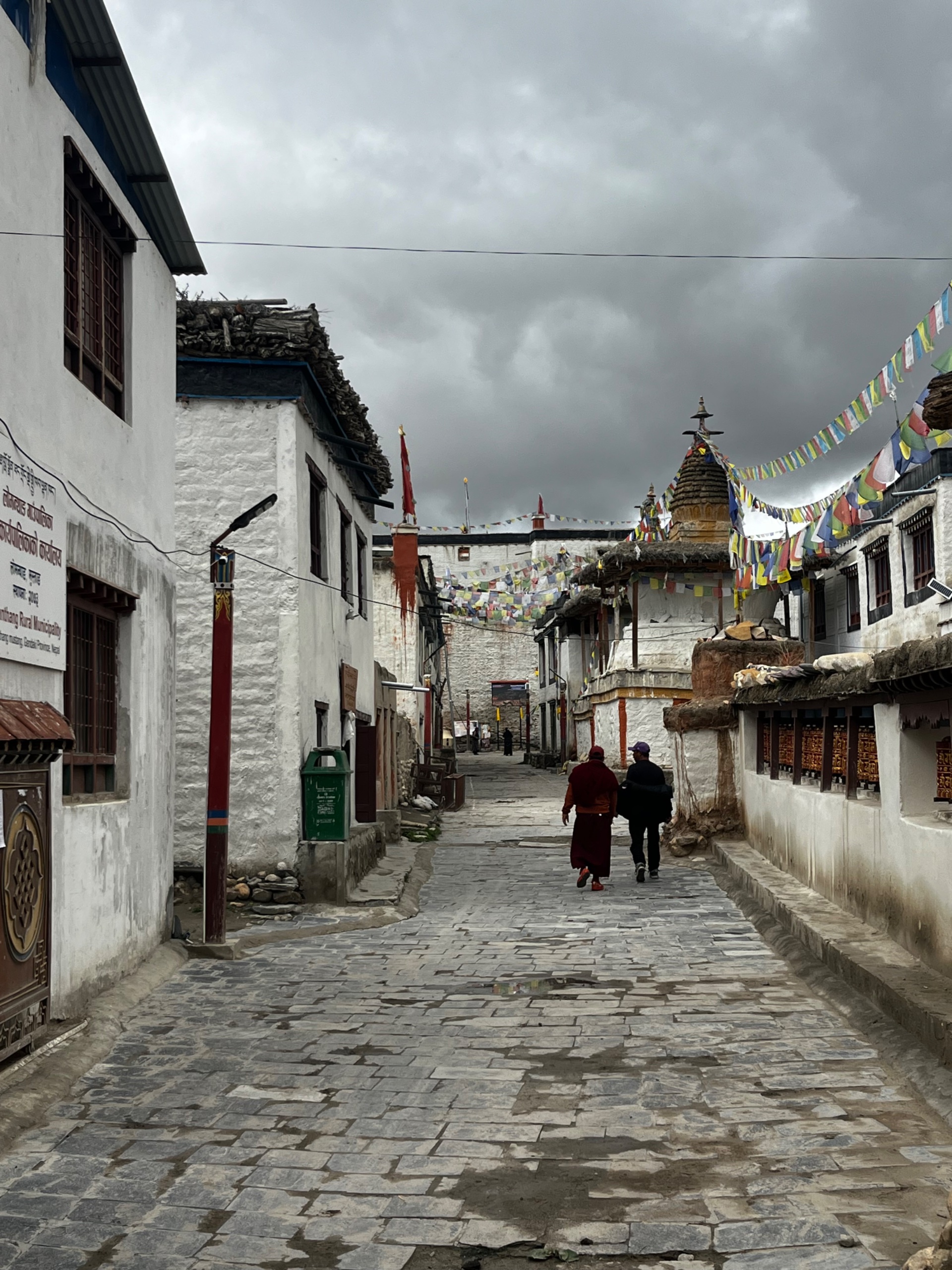
In the previous section on Mustang Mineral Pigments I showed the color palette seen on stupas, monasteries. Regular houses are covered in a white wash that reminded me of Santorini, but the purpose is different. In Santorini is to reflect the light, keep the interior cooler and to prevent infections; in mustang is to protect from the erosion of the winds, since mud bricks would be easily damaged otherwise.
Homes have an smokeless metal stoves (chulho in Nepali) in the middle of the dining / living room (serves both purposes). By burning yak dung, heat is produced to cook and to keep the space warm. They don’t use wood at the floors as I saw in Solukhumbu but instead they have a sort of pressed packed mud. Wood is scarce in Mustang as opposed to Solukhumbu.
Another iconic aspect of Mustangi homes: wood is piles on the rooftops. They serve as burn stock and insulation.
todo photo showing the wood